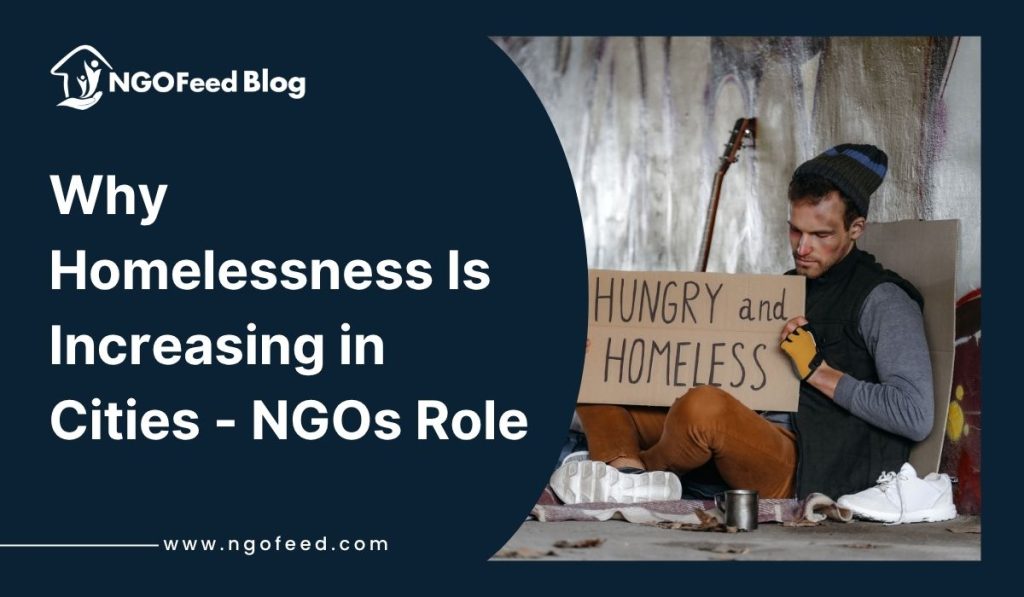
NGOs Supporting Homeless Populations: Homelessness is a multifaceted social problem which concerns millions of individuals in the world, as without a permanent home, people face poverty issues, health issues, joblessness and social isolation. Although governments can contribute to solving the issue of homelessness, Non-Governmental Organisations (NGOs) are vital partners in providing short-term and long-term solutions. They do not just provide emergency relief, but dignify, empower and change the lives of those who have not had a place to call home.
NGOs are involved not just in the direct service delivery but also in advocacy, integration in the community and systemic reforms. The role of NGOs is more than essential as society makes more sense of the problem of homelessness, not as a choice but as a situation that the economic, social and health conditions have created. They also contribute to the rebuilding of hope, developing resilience, and policy reforms to acknowledge housing as a basic human right.
Table of Contents
Understanding Homelessness: Why Support Is Essential
Homelessness is not a state of being but rather a continuum of problems. It involves individuals sleeping in the streets, staying in temporary shelters, dwelling in hazardous accommodations and those who might be forced to lose their accommodations as a result of economic pressures. Homeless people are also vulnerable to intersecting factors, including healthcare access, reduced chances of employment, and social rejection. Homelessness needs multi-layered interventions that will provide instant relief and other interventions that will take longer durations to recover and be empowered.
Where the basic services are limited or available to a few, NGOs intervene. They have a specific influence in metropolitan areas and underserved communities where the official safety nets might be insufficient. The capacity of the NGOs to gain trust, access the affected people directly, respond to the needs of the locals, and shed more light on the larger structural factors of homelessness serves as a way to fill the gaps in the existing systems.
Direct Assistance: Shelter, Basic Needs, and Safety
It is one of the most obvious aspects of NGO contribution is providing immediate relief:
- Shelter emergency: Homeless people can sleep, use hygiene facilities, and avoid severe weather in safe and temporary places. There are many organisations, which operate shelters and provide meals and some other basic care.
- Transitional housing: Longer-term housing that assists people to leave crisis conditions to stability. Case management and future independence planning are usually added to transitional housing.
- Basic necessities: NGOs provide basic human needs, including food, clothing, and hygiene kits, through which the homeless populations can remain healthy and dignified.
- Outreach programs: Street outreach teams go out to meet individuals on the streets and provide support, information and help in referring to services.
Such direct services not only offer short-term safety and relief, but also make homeless people feel respected and acknowledged as people with rights and needs.
Beyond Shelter: Support Services for Sustainable Change
Although shelter is essential, to be sustainable, support should be a wider set of services to meet underlying needs:
Healthcare access:
NGOs operate a large number of mobile clinics or collaborate with the local health service to provide medical check-ups, vaccinations, mental health services and treatment of chronic illnesses. This is crucial because homeless people usually have difficulties accessing traditional healthcare systems.
Employment and skill development:
In order to restore independence, NGOs provide vocational training, job readiness training, and job placements. Such programs assist people in becoming self-reliant and having stable sources of income.
Legal counseling and paperwork:
The absence of identity documents may deny access to potential services and jobs. NGOs assist people in acquiring the necessary documents (ID cards and birth certificates) and offer legal advice in case human rights are infringed.
Mental health and addiction services:
Special services assist people in coping with trauma, addiction, and psychic stress. Counselling and recovery assistance are important to reintegration into society.
Through holistic needs, NGOs enable people to move out of the survival mode and move to a growth and stability stage.
Advocacy and Policy: Changing Systems That Perpetuate Homelessness
In addition to direct services, NGOs have an important advocacy role that can transform the legislation and policy as well as the perception of the society about homelessness. They create awareness that homelessness is a social problem and not an individual problem, busting myths and decreasing stigma. There is public campaigning, publication of research and community outreach which all make a difference in changing the perception of the society about homelessness.
Policy meetings are also practised by some organisations, advocating a legislative change that would increase access to housing, enhance legal rights and support social services to underserved populations. The advocacy assists in shaping the distribution of resources, structure of policies towards the districting of housing and the establishment of inclusive social safety nets.
Another significant focus is legal advocacy: NGOs occasionally resort to public interest litigation in order to protect the rights of homeless people, claiming that the right to shelter and to the necessary services is a human right. These activities not only help people directly but also bring about broader system change.
The Power of Partnerships: Communities, Governments, and NGOs
The problem of homelessness is better tackled as a joint effort. A complex problem like this cannot be resolved by one organisation. NGOs often work alongside:
- Bring local insights to policy and implementation through the government agencies.
- Community organizations and volunteers, developing more robust safety nets and grassroots.
- The social service organisations and healthcare providers, designing interwoven support systems.
- Partners and donors in the private sector, marshalling the necessary resources and finance.
Partnerships enable NGOs to expand their reach and influence, and pool resources and knowledge to have an in-depth approach. Such partnerships can enhance emergency response efforts in the event of crisis, increase affordable housing programs and enhance the community-level support networks.
These actors combine to create not just support systems, but community awareness and a long-term solution commitment.
Conclusion
Homelessness is a social problem that has been largely ignored in most societies across the world. In addition to housing, it also relates to human dignity, health, employment, rights in the law, and community membership. The NGOs are central to tackling these interrelated issues- to offer direct relief, holistic support services, promote a policy change, and community partnership.
Their work is one that brings dignity, resilience, and avenues to stability and inclusion to homeless people. Although sustainable solutions need to be a collective approach that involves governments, civil society, and the community, NGOs continue playing a leading role in bringing change and helping the neediest.
Frequently Asked Questions (FAQs)
1. What is the importance of NGOs to homeless people?
The variety of services offered by the NGOs includes emergency shelter and food, advocacy, and long-term support, which are sometimes beyond the capability of the governments to provide effectively and sensitively to the entire population.
2. What is the role of NGOs in assisting the homelesss to change to normal lifestyles?
NGOs can assist individuals to leave crisis-related modes and become independent and stable by providing holistic services like healthcare, job training, legal, and counseling services.
3. Are there even policy reforms on homelessness that are being undertaken by NGOs?
Yes. NGOs undertake research, awareness activities and also interact with policymakers to enhance housing policies and social safety nets.
4. What can communities do to help NGOs that deal with homeless people?
To ensure that they reach more people and establish enabling conditions, communities can volunteer, donate, engage in awareness activities, and collaborate with NGOs.
Top NGOs State Wise List
Related NGO's Role Posts