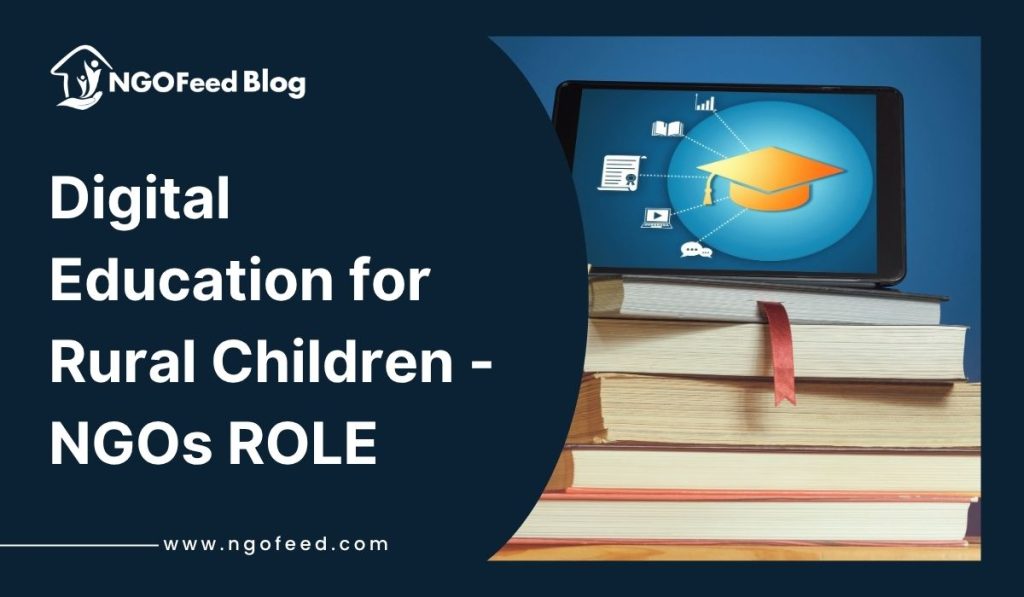
Digital Education for Rural Children: In contemporary learning, digital education has become a transforming power changing the access, distribution, and application of knowledge. In rural areas, however, youngsters sometimes encounter challenges including inadequate infrastructure, a shortage of qualified teachers, and limited technical exposure. This digital gap causes a major difference in educational possibilities between rural and urban areas. Non-Governmental Organizations (NGOs) are essential in bridging this gap by encouraging fair and inclusive access to digital education.
Table of Contents
Knowing Digital Education for Rural
Digital education is the application of technology, such as computers, tablets, cellphones, and internet platforms, to enable learning. It includes interactive tools, online courses, digital content, and e-learning platforms.
For rural youngsters, digital education is about access, inclusion, and empowerment in addition to technology. Working in the area of Education Technology, NGOs hope to guarantee that technical developments help even the most underprivileged communities.
Difficulties Faced by Rural Children
In rural areas, digital education has a lot of promise, but it also has a lot of problems:
- Lack of Infrastructure: Electricity problems and bad internet connections
- Restricted device access: Several households cannot buy PCs or smartphones
- Digital Illiteracy: Teachers and pupils could not have fundamental technological proficiency.
- Language Barriers: Content is usually not offered in local languages.
- Economic Restraints: Poverty limits regular possibilities for education.
These obstacles underline the necessity of focused interventions whereby non-governmental organizations (NGOs are absolutely vital).
The Role of Non-Governmental Organisations in Encouraging Digital Education
1. Offering Digital Infrastructure:
- Nonprofits set up digital learning centers, smart classrooms, and computer labs in rural schools. To provide devices like tablets and laptops, they frequently work with regional governments and commercial companies.
- By closing infrastructure gaps, NGOs guarantee that rural children may use digital learning resources comparable to those available to their urban counterparts.
2. Increasing digital literacy
- Effective use of technology depends on digital literacy. Non-governmental organizations provide training courses for both teachers and students to help them acquire fundamental computer skills and familiarity with internet channels.
- They help societies to be independent in applying digital tools by means of seminars and practical instruction.
3. Creating Material Just for Your Area
- Language is among the main obstacles to digital education. Non-governmental organizations (NGOs) strive to develop educational material in regional languages to increase learning accessibility and relevance.
- This method guarantees that children may study in a language they comprehend and fits inclusive education concepts.
4. Connecting Rural and Urban Areas
- Non-governmental organizations serve as intermediaries between metropolitan technical developments and rural populations. They introduce creative teaching approaches, modern curricula, and digital tools to distant communities.
- This allows them to lessen educational inequity and provide equal learning possibilities.
5. Helping Government Efforts
- Non-governmental organizations frequently work with government initiatives such Digital India, meant to raise digital literacy and infrastructure throughout the nation.
- Such collaborations guarantee greater execution at the grassroots level by increasing the impact and reach of digital education projects.
6. Encouraging inclusive education
- Non-governmental organizations concentrate on underprivileged communities, including girls, children with disabilities, and economically underprivileged pupils. They create initiatives to guarantee no child is left behind in the digital revolution.
- This inclusive methodology helps to foster social justice and sustain long-term community growth.
7. Monitoring and assessment
- Through polls, comments, and performance monitoring, non-governmental organizations constantly evaluate how digital education programs affect people.
- This contributes to refining techniques and guaranteeing responsibility.
Effects of NGO Interventions
The engagement of non-governmental organizations has resulted in notable advances in rural education:
- Rising retention and enrollment rate
- Enhanced Learning Outcomes
- Improved digital literacy among teachers and students.
- Improved knowledge of career options.
- Giving rural people power
In addition, digital education gets kids ready for the future employment markets where technological competencies are becoming more and more vital.
Challenges Faced by NGOs
While NGOs play a vital role, they also encounter challenges:
- Funding limitations
- Logistical difficulties in remote areas
- Resistance to change in traditional communities
- Sustainability of digital initiatives
Addressing these challenges requires collaboration between NGOs, government bodies, and the private sector.
Conclusion
Digital education holds the potential to transform the lives of rural children by providing access to quality learning and future opportunities. NGOs serve as catalysts in this transformation by bridging gaps in infrastructure, literacy, and accessibility.
Their efforts not only enhance educational outcomes but also contribute to broader social and economic development. As India continues to advance digitally, the role of NGOs in ensuring inclusive education becomes increasingly crucial.
Frequently Asked Questions (FAQs)
Q1. Why is digital education important for rural children?
It provides access to quality learning resources and bridges the urban-rural education gap.
Q2. How do NGOs support digital education?
They provide infrastructure, training, content, and community support.
Q3. What are the main challenges in rural digital education?
Lack of internet, devices, digital skills, and financial resources.
Q4. Can digital education replace traditional teaching?
No, it complements traditional methods and enhances learning.
Related NGO's Article Posts