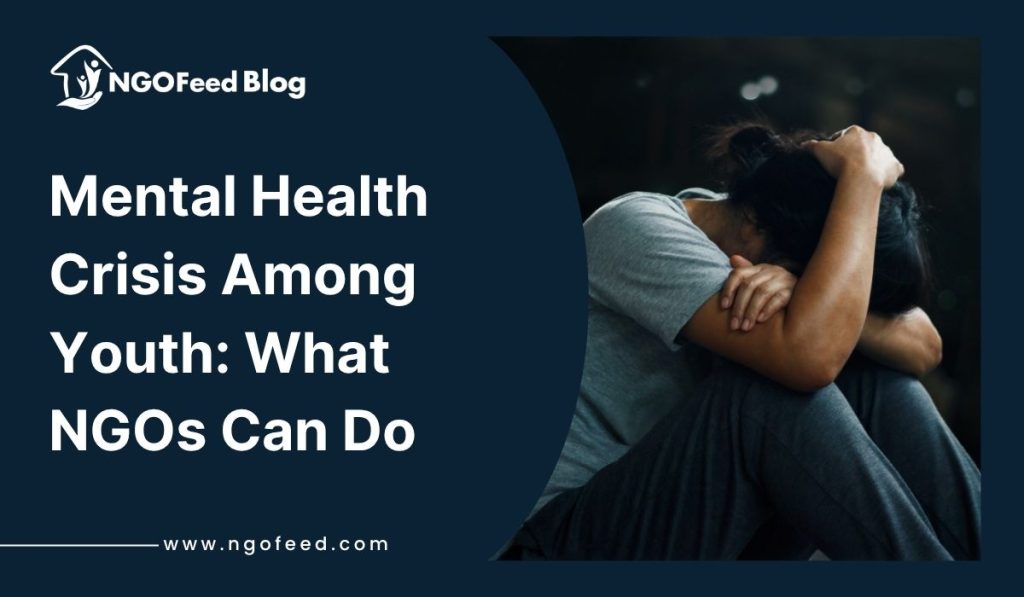
Youth Mental Health Crisis: The mental health crisis among youths is increasing in the world. Academic pressure and unemployment are not the only demands which today’s young people have to cope with, as social media influence and the anxiety concerning the climate are getting even more complex and stressful. The issues of mental health, like anxiety, depression, and emotional distress, are becoming increasingly popular and pressing.
One out of every 7 adolescents in the world, between the ages of 10 and 19 years old, has a mental health condition, and most of them are unattended because of stigma and the unavailability of care. NGOs must play a very important role in solving this crisis, not only in terms of offering supportive services but also in terms of reforming the way communities interpret and approach youth mental health.
Table of Contents
What Is the Youth Mental Health Crisis?
The youth mental health crisis is a phenomenon of the rising incidence of mental health challenges in the youth, such as anxiety, depression, behavioural problems, and emotional pain.
Mental health issues tend to onset at an early age – numerous conditions manifest before the age of 24. Nevertheless, mental health services are available to a limited number of people, particularly in low- and middle-income nations.
Unfortunately, suicide is one of the causes of death among the youth across the world, which underscores the problem.
This crisis is not a mere health problem, but it has an impact on education, work, relationships, and well-being in general.
Why Mental Health Issues Are Rising Among Youth
The growth in the mental health of youth is caused by a combination of several factors.
Scholastic and Professional Stress.
Youngsters are under severe pressure to be academically good and gain stable careers. Anxiety and burnout are frequent results of competitive conditions and a fear of failure.
Digital Overload and Social Media.
Social media has negative effects on self-esteem and comparison, and it exposes the youth to cyberbullying and unrealistic ideals.
Economic Uncertainty
A lack of jobs and economic uncertainty are among the causes of stress and hopelessness. Millions of young people are unable to secure sustainable jobs worldwide.
Crises and Uncertainty Worldwide.
The future is unpredictable due to climate change, pandemics and conflicts, which adds to anxiety and emotional distress among young people.
Social Isolation and Alteration of Lifestyles.
Digital life, urbanization and decreased face-to-face contact have made people lonelier and less supportive in terms of emotional support.
Key Challenges in Addressing Youth Mental Health
Even with increased awareness, there are several obstacles to effective mental health support.
Stigma and Silence
Lots of youths are afraid to discuss mental illness out of fear of being judged. Research indicates that many young people fail to seek assistance despite their difficulties.
Lack of Access to Services
Mental health services are inadequately funded and are not readily available, especially in rural and low-income areas.
Shortage of Professionals
The lack of trained mental health professionals is a global issue, and it is hard to match the increased demand.
Low School-Based Supports.
Many schools lack counsellors, mental health programs, and trained staff to assist students.
Impact of Mental Health Crisis on Young People
The effects of poor mental health among young people are widespread.
Educational Disruption
Problems of mental health may result in poor performance, absenteeism, and school dropout.
Physical Health Issues
Sleep, nutrition, and general physical well-being might be affected by mental health conditions.
Risk Behaviours
The unaddressed mental health problems can result in drug abuse, self-injury or dangerous behaviour.
Long-Term Social Impact
Mental illness among the underage may result in unemployment, low levels of productivity and social rejection in the long term.
What NGOs Can Do to Address the Crisis
NGOs are also influential in dealing with the mental health of youth in the context of community-based and accessible solutions.
Create Awakening and Diminish Stigma.
NGOs can conduct campaigns, workshops, and social media initiatives to normalize conversations about mental health.
- Conduct awareness campaigns at the school and in the community.
Take the stories and life stories.
Promote open dialogue
Provision of Mental Health Services that are Accessible.
To fill the gap in mental health provision, NGOs can provide:
- Free or low-cost counselling
- Crisis support and helplines.
- Mental health mobile clinics.
Such services are most needed in underserved regions.
Create Safe Spaces for Youth
Secure and welcoming spaces enable youngsters to express themselves without fear.
- Youth peer support groups and youth clubs.
- Community centres
- Online support communities
Studies indicate that peer support is a very important factor in the mental health of young people because most of them feel comfortable talking to their friends.
Bring Mental Health into Education.
NGOs are able to work with schools to:
- Implement mental health education.
- Educate and train teachers on early signs.
- Offer counselling services in schools.
Young People as Change-Makers.
Youth programs can be very useful in addressing mental health issues.
Programs that engage young people in developing and executing schemes help build resilience and ownership.
Technology Can Be Used to Support Mental Health.
Mental health services can be increased through digital platforms:
- Self-care and counselling mobile applications.
- Online therapy sessions
- AI-based support tools
Advocate for Policy Change
NGOs can affect policies through:
- Lobbying to fund mental health more.
- Encouraging policies that are youth-friendly.
- Cooperation with the governments and institutions.
Innovative NGO Strategies That Are Making a Difference
NGOs all over the globe are taking new strategies to address youth mental health.
Peer Support Programs
The cultivation of young volunteers who support their peers in training is valuable for building relatable, easy-to-access support systems.
Expressive Imagination and Therapy.
Art, music, and writing programs help youth express their feelings and cope with stress.
Community-Based Interventions
Localisation of programs to specific cultures is a guarantee of improved engagement and influence.
Holistic Approaches
New strategies are not only about treatment but also about prevention, resilience, and overall well-being.
Challenges NGOs Face in Tackling Youth Mental Health
Irrespective of their effort, NGOs are faced with several challenges that include:
- Poor and meager funding and resources.
- High demand for services
- Mental health stigma in culture.
- A shortage of qualified personnel.
- Inability to scale programs.
It is necessary to address these issues through more serious collaboration and long-term investment.
The Way Forward: Building a Supportive Ecosystem
The answer to the mental health crisis among young people is in the holistic and collaborative approach.
Multi-Stakeholder Collaboration
There should be collaboration between the governments, NGOs, schools, families, and communities.
Early Intervention
Mental health problems can be identified and treated at an early stage to prevent chronic effects.
Youth-Centered Policies
The policies should put the voice of youth in the spotlight as well as their unique needs.
Encouraging Psychological Health, Not Simple Medicine.
The emphasis of mental health strategies should be on prevention, resiliency, and emotional well-being.
Conclusion
One of the most pressing issues today is the mental health crisis of young people. Young people are experiencing the effects of rising stress, social pressures and uncertainties around the globe on an unprecedented scale.
The NGOs are instrumental in solving this crisis through the provision of support services, the creation of awareness, and the promotion of systemic change. Their community strategy ensures mental health care is more accessible, inclusive and effective.
Nevertheless, sustainable transformation is something that takes collective effort. Today, by making youth mental health a priority, we are able to create a healthier and more resilient generation in the future.
Frequently asked questions (FAQs)
1. What is the mental health crisis of the youth?
It is defined as the rising cases of mental problems among the youth that include anxiety, depression, and stress.
2. What is the reason that mental health problems are on the rise among young people?
These causes are academic pressure, the influence of social media, economic uncertainty, and global challenges such as climate change.
3. What can NGOs do to help the youth’s mental health?
NGOs are also able to counsel, create awareness, support programs, and promote the need to have better policies regarding mental health.
4. Why should early intervention be significant in mental health?
Through early intervention, serious cases of mental illnesses are prevented, and the long-term outcomes are enhanced among the youth.
Top NGOs State Wise List
Related NGO's Role Posts