Role of NGOs in Anganwadi: Anganwadi’s, the foundation of India’s Integrated Child Development Services (ICDS) scheme, are essential for the development of early childhood, maternal health, and nutrition. While government-run Anganwadi’s provide the backbone of this network, Non-Governmental Organizations (NGOs) are instrumental in improving their efficiency and broadening their scope, especially in disadvantaged and marginalized areas. Their participation is critical for closing gaps and assuring the comprehensive development of India’s youth.
Table of Contents
Understanding the Anganwadi System in India
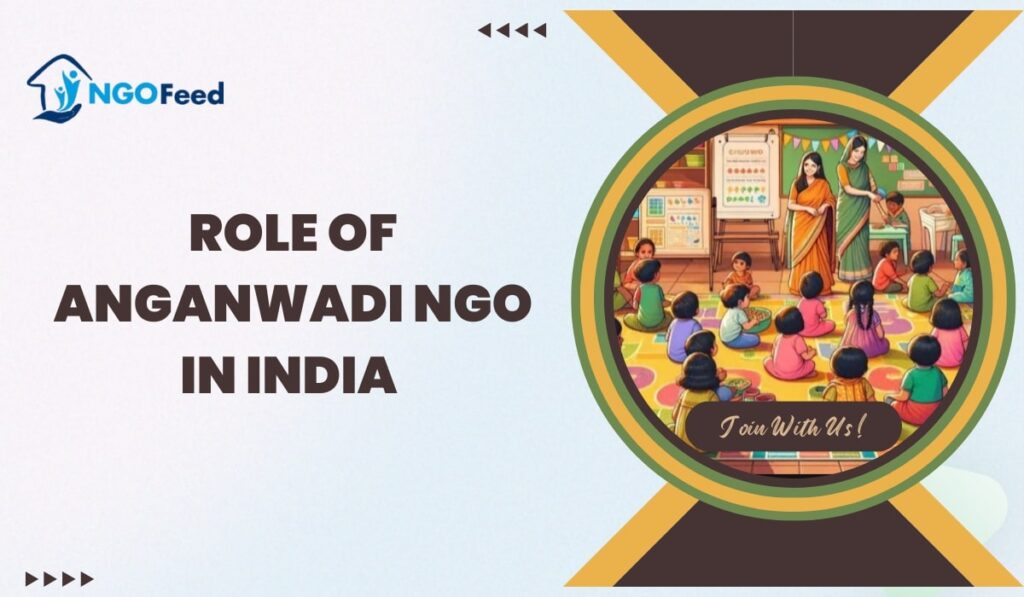
Anganwadis serve as local centers providing a set of six services: supplementary nutrition, preschool non-formal education, immunization, health evaluations, referral services, and health and nutrition education. They primarily cater to children aged 0-6 years, as well as pregnant and lactating women. Nevertheless, obstacles such as infrastructure challenges, insufficient staffing, and accessibility limitations frequently impede their optimal operations.
Also Read: Role of NGOs in Street Children
| Category of NGO Contribution | Specific Activities/Roles | Impact/Benefits | Challenges Faced |
| Community Mobilization and Awareness | – Conducting awareness campaigns on early childhood care, nutrition, and immunization. Building trust and rapport in marginalized communities. Utilizing local languages and culturally sensitive approaches. Combating misinformation. | – Increased community participation in Anganwadi activities. Improved understanding of child health and nutrition. Enhanced access to Anganwadi services. | – Reaching remote and marginalized populations. Overcoming cultural barriers. Building and maintaining community trust. |
| Supplementary Support and Resource Augmentation | – Providing supplementary nutrition, educational materials, and play equipment. – Organizing health camps and workshops. – Facilitating access to clean water, sanitation, and healthcare. | – Enhanced quality of Anganwadi services. – Improved health and nutrition outcomes. – Increased availability of resources. | – Securing consistent funding for supplies. – Managing logistics and distribution. – Ensuring sustainability of resource provision. |
| Capacity Building and Training | – Offering training programs for Anganwadi workers (AWWs) on child development, nutrition, and health. – Providing training on data collection and record-keeping. – Implementing new technologies. – Training local women to be AWWs. | – Improved skills and knowledge of AWWs. – Strengthened monitoring and evaluation. – Enhanced service delivery. | – Securing funding for training programs. – Ensuring AWWs attend and apply training. – Adapting training to local contexts. |
| Advocacy and Policy Influence | – Advocating for the rights of children and women. – Conducting research and generating evidence-based data. – Act as a bridge between communities and government agencies. | – Increased awareness of challenges faced by Anganwadis. – Informed policy decisions. – Improved functioning of the ICDS scheme. | – Influencing government policies. – Maintaining independence and credibility. – Securing necessary data. |
| Monitoring and Evaluation | – Conducting independent monitoring and evaluation of Anganwadi activities. – Tracking key indicators (malnutrition, immunization, attendance). – Providing feedback to government agencies. | – Improved accountability and transparency. – Identification of areas for improvement. – Enhanced effectiveness of Anganwadi programs. | – Accessing reliable data. – Ensuring objectivity and impartiality. – Communicating findings effectively. |
| Addressing Specific Needs | – Focusing on vulnerable populations (children with disabilities, tribal children, slum children). – Developing innovative programs and interventions. – Providing disaster relief. | – Tailored support for marginalized groups. – Improved outcomes for vulnerable children. – Rapid response in crisis situations. | – Reaching and engaging specific populations. – Securing funding for specialized programs. – Adapting programs to diverse needs. |
Government Initiatives Strengthening Anganwadis
The Government of India continues to strengthen Anganwadi services through Saksham Anganwadi and POSHAN 2.0, which focus on improving nutrition outcomes, early childhood care and education (ECCE), infrastructure, and service delivery. The initiative promotes the modernization of Anganwadi Centres with better buildings, smart learning tools, growth monitoring devices, and improved nutrition services for children, pregnant women, and lactating mothers. NGOs complement these efforts by supporting awareness campaigns, capacity building, community participation, and last-mile service delivery.
Digital Transformation of Anganwadi Services
Digital technology is changing the landscape of Anganwadi services in India. Mobile apps, digital attendance, growth-tracking devices, and real-time data collection have made it easier to track beneficiaries and provide services. NGOs assist in this transformation by providing training in digital technologies to Anganwadi workers, aiding data management, and encouraging communities to become digitally literate.
The Indispensable Role of NGOs in Anganwadi
NGOs contribute distinctive strengths and insights to the Anganwadi framework, complementing and bolstering governmental initiatives. Their contributions span various areas:
Also Read: Role of NGOs in Civil Society
Community Mobilization and Awareness:
- NGOs in India are proficient in fostering trust and connections within communities, particularly those that are marginalized or difficult to reach.
- They carry out awareness initiatives regarding the significance of early childhood care, nutrition, and immunization, encouraging community involvement in Anganwadi programs.
- They frequently employ local languages and culturally aware methods to connect with families.
- They can assist in countering misinformation and detrimental cultural practices that adversely affect child health.
Supplementary Support and Resource Augmentation
- NGOs can offer additional nutrition, educational resources, and recreational equipment to Anganwadi’s, improving service quality.
- They can organize health camps, workshops, and training sessions for Anganwadi workers (AWWs) and community members.
- They can help facilitate access to vital resources and services, including clean water, sanitation, and healthcare.
Capacity Building and Training:
- NGOs provide training programs for AWWs in various aspects of child development, nutrition, and health, enhancing their competencies and expertise.
- They can offer instruction on data collection, record maintenance, and reporting, thereby strengthening the monitoring and evaluation of Anganwadi operations.
- They assist in integrating new technologies within the Anganwadi system.
- They can train local women to serve as AWWs or assistants.
- NGOs also train Anganwadi Workers (AWWs) in digital record-keeping, mobile applications, growth monitoring tools, and early childhood education methodologies to improve service delivery.
Also Read: Role of UNWTO in Tourism
Advocacy and Policy Influence:
- NGOs are vital in championing the rights of children and women, raising awareness about the issues confronting Anganwadi’s.
- They can conduct studies and produce evidence-based information to guide policy choices and enhance the efficiency of the ICDS scheme.
- They can serve as a liaison between communities and governmental bodies, promoting dialogue and cooperation.
Monitoring and Evaluation:
- NGOs can undertake independent assessments and evaluations of anganwadi initiatives, offering valuable insights to government entities.
- They can monitor essential indicators such as child malnutrition rates, immunization levels, and preschool attendance, pinpointing areas needing improvement.
- They can help ensure that government funds are utilized appropriately.
Addressing Specific Needs:
- NGOs can concentrate on meeting the unique requirements of vulnerable groups, such as children with disabilities, those from tribal backgrounds, and those living in slums.
- They can create innovative programs and interventions to address these needs.
- They can assist in delivering disaster relief during crises.
Supporting Early Childhood Development
Many NGOs now focus on holistic child development by promoting play-based learning, early stimulation activities, inclusive education, and mental well-being. They also educate parents about responsive caregiving, positive parenting, and early childhood development during the first 1,000 days of life.
Data and Impact:
NGOs have contributed greatly to the enhancement of Anganwadi services in India. Recent data from the National Family Health Survey (NFHS), POSHAN Tracker and the Ministry of Women and Child Development (MWCD) indicate better nutrition, immunisation and early childhood care for children. These initiatives have been complemented by NGOs that have helped in the training of Anganwadi workers, awareness creation, community engagement, and enhancing the effectiveness of government programmes.
Challenges and Considerations:
Despite their valuable work, NGOs face several challenges while supporting Anganwadis:
- Limited and inconsistent funding.
- Coordination issues with government agencies.
- Lack of digital infrastructure in some areas.
- Shortage of trained Anganwadi workers.
- Climate-related disruptions affecting services.
- Difficulty in measuring long-term programme impact.
Also Read: Role of NGOs in Conflict Resolution
Moving Forward:
The effectiveness of Anganwadi services can be enhanced by the collaboration of NGOs, the government and society. Enhancing early childhood development and nutrition programmes in India can be achieved through increased funding, improved use of digital tools, training of Anganwadi workers, increased community participation and the use of data to inform better decision-making.
Top NGOs State Wise List
Related NGO's Role Posts