World Earth Day 2026: We inhabit a planet called Earth, which is also known as “the diversity of life on Earth.” In Hindi, it is referred to as “धरती” or “धरती मां.” We must understand the importance of our planet and take action to protect it. Earth Day, which is celebrated annually on April 22, is a global event aimed at demonstrating support for environmental protection.
April 22, 1970, was the inaugural Earth Day, and now; EARTHDAY.ORG organizes Earth Day as an international movement for the Environment, reaching over 1 billion people across 190 countries each year. Earth Day, known for building awareness and taking action on environmental issues, will celebrate its 56th anniversary in 2026. The official Earth Day 2026 theme will be announced by EARTHDAY.ORG closer to the event.
This article will teach you about a fantastic day celebrating our planet. Here, you will find information about the theme, history, importance, challenges, how NGOs work for our planet, and much more.
Table of Contents
What is Earth?
Earth is positioned third from the Sun and is the only known astronomical body that supports life. This is made possible because Earth is a water planet and the only one in our Solar System that has liquid surface water, which is essential for life. The vast majority of Earth’s water is contained in its global ocean, which covers 70.8% of the planet’s crust. Some of the crucial points that you must know about the Earth, there are several alternatives to Earth some of them are The world, the globe, Sol III, Terra, Tellus, Gaia, and Mother Earth.
Also Read: Role of NGOs in Sustainable Development
World Earth Day 2026 History
Earth Day, which takes place on April 22 every year, commemorates the birth of the modern environmental movement in 1970. It is one of the largest events in the world, having grown significantly since its inception in the United States. On April 22, 2026, we will celebrate the 56th Earth Day. This comes at a time when our planet is experiencing record-breaking heat every year, and pollution has reached unprecedented levels.
Today, this day is celebrated in over 190 countries and is one of the largest environmental awareness movements that has been seen all around the world, with millions of people planting trees, organizing clean-ups, educating on the environment, advocating for climate change, and taking other actions to promote sustainability.
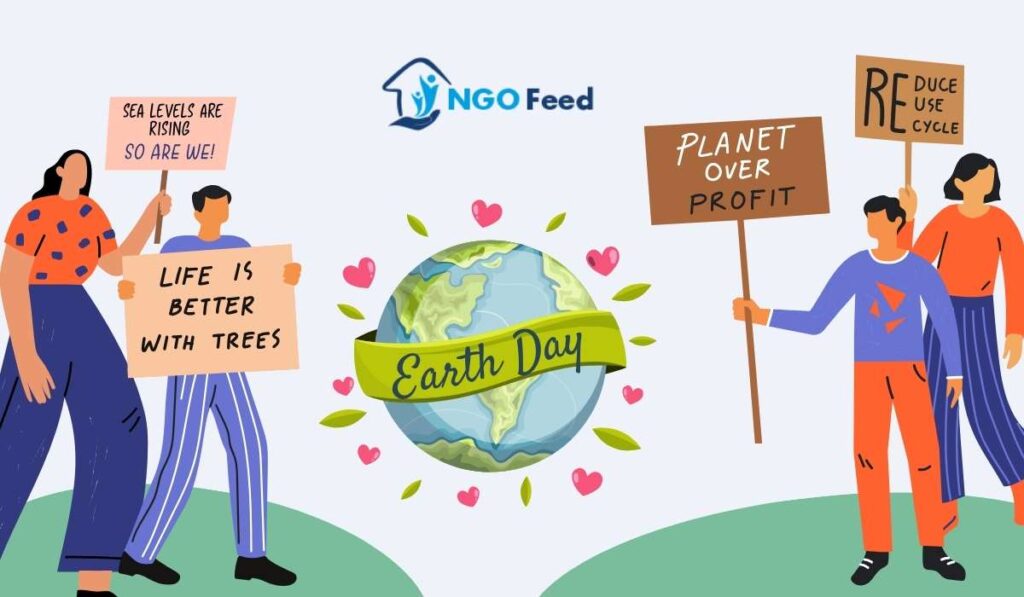
World Earth Day 2026 Theme
The official Earth Day 2026 theme will be announced by EARTHDAY.ORG closer to the event.
Also Read: Role of NGOs in Agriculture
How? By joining us in Earth Action Day, encourage all to take action—educate, advocate, and mobilize. Pledge an Earth Action on social media. Attend/plan/register a local event. Integrate Earth Day lessons into your curricula. Donate to support our efforts. Below you’ll find resources (plus quizzes, fact sheets, articles and more) to help you take action this Earth Day, April 22nd, and every day.
Source: earthday.org
Why do we celebrate Earth Day?
In the decades leading up to the first, Americans drove enormous, inefficient automobiles that consumed vast amounts of leaded gas. Industries emitted smoke and sludge with little concern for the consequences from either the law or bad press. Air pollution was widely accepted as a sign of prosperity. Until recently, most Americans were oblivious to environmental concerns and how a polluted environment can threaten human health. However, in 1962, Rachel Carson’s New York Times bestseller Silent Spring was published, marking a turning point. The book sold over 500,000 copies in 24 countries and raised public awareness and concern about the environment and the inextricable links between pollution and public health.
Environmental Challenges in 2026
Even though there are many environmental issues today, the world is still struggling with many challenges like climate change, biodiversity loss, deforestation, plastic pollution, water scarcity, air pollution and more and more extreme climate change events happening. Earth Day is a call to action for everyone to play their part in conserving the environment and creating a more sustainable future.
Indian NGOs working for environmental protection
In India, environmental conservation is one of the most critical roles played by nonprofit organizations, particularly in areas such as afforestation, safeguarding biodiversity, waste management, climate education, water management, sustainable agriculture and community awareness campaigns. They support the government’s actions and encourage the general public to take part in the protection of the environment.
This section provides you with information about some NGOs in India that work for environmental protection. Let’s have a look at the details below.
Also Read: Role of NGOs in Environmental Protection
Ashoka Trust for Research in Ecology and the Environment (ATREE)
Ashoka Trust for Research in Ecology and the Environment (ATREE) is a well-known non-profit organization that aims to conserve the environment and promote sustainable and socially just development. ATREE focuses on generating and sharing rigorous interdisciplinary knowledge that meets the needs of grassroots communities, policymakers, and the public. It prioritizes capacity building to train the next generation of scholars.
SankalpTaru Foundation
SankalpTaru Foundation is an NGO that uses technology to promote environmental sustainability. Their mission is to plant trees across India, with the belief that it should be done “by the people, for the people”. So far, they have planted close to one million trees across 27 states, including some of India’s most polluted cities. Through their efforts, they aim to create a healthier and happier environment for all. Each tree they plant has a positive impact on the environment and helps to combat pollution. Additionally, their work helps to support the livelihoods of poor farmers and create a diverse ecosystem.
Also Read: NGOs in Conservation and Biodiversity Protection
Chintan Environmental Research and Action Group
Chintan is a non-profit organization that has been working since 1999 to change the way we look at waste. Instead of considering it a burden, we see waste as a valuable resource that can help support livelihoods and fight poverty. We also believe that waste can be used to empower women and children.Our organization has received international recognition for our work in enabling the informal recycling sector to take an active role in waste management in Delhi NCR.
We focus on creating and facilitating green jobs in the waste sector, conducting research and advocating for better urban policies, and organizing the informal sector so that it can better represent itself. We are committed to eliminating child labor in the sector and converting waste into social wealth.
Conclusion
World Earth Day is a reminder that we are all responsible for protecting the environment! Governments and international organizations are key players in the process, but there is a critical need for the actions of individuals, communities, businesses and non-profit organizations. We can help create a healthier planet for current and future generations by conserving natural resources, minimizing pollution, encouraging the use of renewable energy, and promoting sustainability. Earth Day involves small steps that make a difference in creating a more sustainable world.
Top NGOs State Wise List
Related Important Days Posts