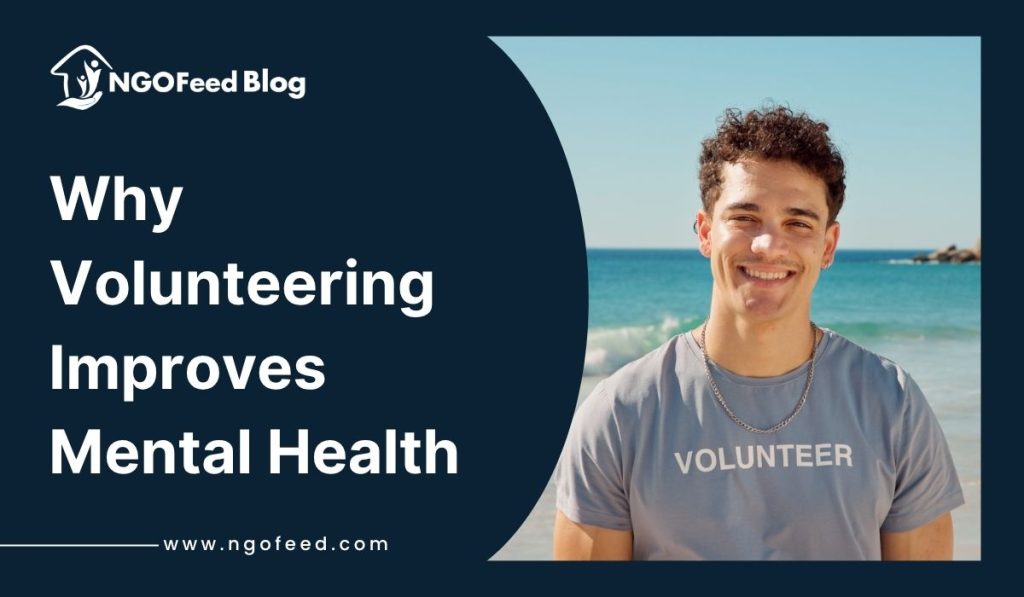
Volunteering Improves Mental Health: Mental health has become a major worldwide worry in recent times impacting people from many socioeconomic backgrounds, professions, and age categories. Researchers and practitioners have looked for holistic and accessible methods to improve psychological well-being because of growing levels of stress, worry, despair, and social isolation. Volunteering has emerged as a potent, non-clinical means of improving mental health among these.
Volunteering is a mutually advantageous interaction that benefits both the volunteer and the recipient rather than just a selfless deed. Based on the tenets of Positive Psychology, volunteering promotes emotional resilience, social cohesiveness, and a sense of direction, therefore providing a useful instrument for fostering mental health.
Table of Contents
Volunteering and Mental Health: Understanding the Connection
Mental health is shaped by a complex interplay of social, psychological, and biological elements. Volunteering tackles all three dimensions at once. Positive interactions may even impact brain chemistry by providing emotional contentment and promoting social ties.
From a psychological perspective, meaningful activities help people go beyond self-centered worries. By diverting attention to beneficial activities, it helps to lessen rumination, a major cause of anxiety and sadness.
Feeling of Meaning and Purpose
Development of a feeling of direction is among the most significant benefits of volunteering. People who believe their life has purpose usually report increased levels of happiness and decreased levels of psychological discomfort. Volunteering provides chances to support social justice, education, healthcare, and environmental protection among other causes.
For those going through life changes, such as students, retirees, or those recovering from personal difficulties, this sense of purpose is especially advantageous. It gives guidance and strengthens the idea that one‘s decisions can bring about beneficial change.
Lowering Anxiety and Stress
Volunteering naturally relieves stress. Performing small acts of kindness causes the brain to create endorphins and other “feel-good” chemicals. Often explained by neurotransmitter control, this process lowers anxiety levels and helps to level mood.
Volunteering also brings organization into everyday life, which can be especially beneficial for people coping with emotional discomfort or ambiguity. Volunteering’s regularity and accountability give one stability and control.
Fighting Depression
Depression is usually marked by emotions of hopelessness, loneliness, and apathy. By fostering social connection, active involvement, and a feeling of success, volunteering directly solves these problems.
By enabling people to see their own abilities and potential, helping others might alter their outlook. This promotes self-worth and lessens bad self-perception—two things absolutely vital for controlling depressive symptoms.
Enhancing Social ties
One major risk factor for poor mental health is social isolation. Volunteering helps one to meet many different types of people, hence promoting a feeling of community. Social psychology says that good relationships with other people are very important for emotional health.
Volunteers create meaningful relationships via teamwork and shared objectives that could grow into support networks and enduring friendships. These links offer emotional stability and help to lessen feelings of loneliness.
Building Self-Esteem and Trust
Volunteering improves one’s self-esteem by giving them a feeling of success and acknowledgment. People gain confidence in their skills when they observe the tangible results of their labor.
Volunteering also entails acquiring fresh competencies including communication, leadership, and problem-solving. Especially among students and young professionals, these skills enhance employability and foster personal development.
Promoting Mental and Physical Activity
Volunteering in many ways entails physical activity, which is strongly associated with better mental health. Activities including fieldwork, event planning, or community clean-ups help lower stress hormones and encourage more peaceful sleep patterns.
Volunteering also keeps the brain active, therefore preventing cognitive deterioration. It promotes flexibility, critical thinking, and inventiveness, all of which support general psychological health.
Cultivating Thankfulness and Empathy
Volunteering helps one to develop empathy and compassion by exposing them to many different life events. It helps people to see things from other points of view and gain a greater respect for their own situation.
Increased happiness and lower unpleasant feelings are connected with this appreciation. It changes the perspective from what is missing to what is there, thus fostering a more optimistic attitude toward life.
Developing Emotional Strength
Volunteering frequently entails dealing with actual difficulties, like assisting underprivileged populations or reacting to emergencies. By teaching people how to deal with hardship, these events help to build their emotional resiliency.
Volunteers acquire greater emotional control and problem-solving abilities over time, which helps them to more efficiently manage personal obstacles.
Conclusion
Volunteering is a simple and effective approach to improve one’s mental health. It provides a comprehensive approach to well-being by encouraging a feeling of purpose, lowering stress, enhancing social ties, and supporting personal growth. Volunteering, among many other initiatives, helps both the person and society, so fostering a cycle of support and optimism.
Including volunteering into everyday life might be a significant stride towards emotional equilibrium and resiliency in a world where mental health concerns are more and more commonplace. It is a route to healing, development, and fulfillment, not only a deed of charity.
Frequently Asked Questions (FAQs)
Q1. How does volunteering help reduce anxiety?
It shifts focus away from personal worries and promotes relaxation through positive social interactions.
Q2. Can volunteering improve long-term mental health?
Yes, consistent volunteering builds resilience, purpose, and strong social networks.
Q3. Is volunteering useful for students?
Absolutely. It enhances confidence, skills, and emotional well-being.
Q4. What type of volunteering is best for mental health?
Any activity aligned with personal interests and values is most effective.
Related NGO's Article Posts