

UN 2030 Goal 6 for Clean Water and Sanitation: Access to safe water and cleanliness is one of humanity’s basic needs. However, how exactly is this need being met? This question arises because of the gradual population rise, urbanization and the need for water in agriculture, industries and the energy sector. This is also one of the sustainable development goals of the United Nations on paper, but ideally, its essence goes beyond economic growth and productivity. It also inculcates the quality and sustainability of water resources that are critical to the survival of the people.
The world is already on the verge of a global water crisis, and all the authorities and communities must take necessary actions to prevent this grave situation. At an international administrative level, water-related sustainable development goals should be fulfilled. At a theoretical level, we all understand that we need to safeguard our resources for future generations; that is what sustainability teaches us. But are we imbibing it in our day-to-day lives? If not, how can we do it now?
Water is somewhere related to development on a global level. Since several discussions already revolve around ensuring the availability and sustainable management of water and sanitation for all, we need to discuss other factors like the 2030 Agenda and one of their goal, 6 Clean Water and Sanitation, which consists of a plan of action for the people, the planet, and prosperity.
Since the problem is already known to us, it is better to have a more solution-based approach rather than just skimming through the issue to no avail. The solutions need to be imbibed at all levels, starting from a grassroots community level and going on to a collaboration between states on a global level.
The United Nations Department of Economic and Social Affairs has carefully listed some crucial targets to achieve by 2030. These include strengthening the local communities by improving water and sanitation management and achieving universal and equitable access to safe and affordable drinking water for all, among other goals.
UN 2030 Goal 6 for Clean Water and Sanitation

Organisations that work for Sustainable Development Goals
Let us look at some organisations that have worked extensively in supporting this sustainable development goal:
Watershed Organisation Trust

The watershed Organisation Trust has long been working on water and land management issues with a holistic and participative approach. The organisation has strategically focussed on reviving groundwater levels, conserving natural vegetation, and educating people in rural communities. The organisation has actively stood up against the degradation of the environment in the rural areas of our country with resourceful action plans for biodiversity conservation and ecosystem restoration, integrated watershed development and water governance and stewardship.
Talking about the numbers, till now, the organisation has impacted 2.58 million people from 2432 villages through their watershed development activities. They created 347.55 crore litres of water storage capacity in 2021-22. They have also successfully catered drinking water facilities to 78,000 people and more than 22,300 school students.
Tarun Bharat Sangh
The Tarun Bharat Sangh is currently working on a project on adapting to climate change through water management in Eastern Rajasthan. Under this project, the organisation has been actively working in 30 villages in the district of Karauli in Rajasthan. This is one of India’s 100 most backward districts, as per the development index of the Planning Commission of India. In this area, the organisation is actively working on implementing rainwater harvesting with indigenous communities for sustainable development and livelihood generation. Besides, it also aims to enhance the efficacy of these indigenous communities in water management and the wise utilisation of water resources. The organisation aims to organise the rural areas through this project for better water management and conservation. Also, statistically, the expected direct or indirect beneficiaries are 900 families and 6,000 people.
Centre for Aquatic Livelihood, Jaljeevika

This more focused and specialised organisation solves a specified issue related to community resilience and capacity building to enhance livelihood opportunities using existing water bodies for small-scale fishermen. Technically, they are working towards increasing the potential utility of water bodies and creating value around such livelihood opportunities. Closely looking at the strategy of Jaljeevika, we will notice that they are very carefully focussing on institution development, technology sourcing, business service providers, IT-based services, and research and advocacy partnership and, in a way, converging better water management in unity with the sustainable development goals and the productivity of the communities.
When we look at what we want to achieve and compare it with our current status, we notice an incongruence between the optimum situation and the current status quo. On paper, we understand that we have spent eternities misusing resources and poorly managing them as a part of the “ecosystem” that we have created, considering ourselves the most complex and developed species of the ecosystem- we have overexploited groundwater and contaminated freshwater supplies. We are, unfortunately, gradually leading ourselves towards water scarcity and other such issues. However, this does not mean that we will keep going down that lane; there is still scope for improvement- and if we start taking steps on a personal level, we can contribute significantly towards a better future for all.
Read also:
Related NGO's Article Posts
AI for Social Impact: How Technology Can Improve Public Services
Artificial Intelligence is increasingly becoming part of how governments, institutions and public organisations solve everyday problems. While much of the conversation around…
How to Measure NGO Impact Effectively: A Practical Guide for Nonprofits
Making a social impact is central to the aim of every NGO - but how do you gauge whether your work is…
NGO Governance Framework Explained: A Complete Guide for Nonprofits
Every successful NGO is built on good governance. It helps an organization to be transparent, accountable, and able to effectively carry out…
HR Policies Every NGO Should Have: A Practical Guide for Nonprofits
An NGO's impact depends not only on its mission but also on the people who bring that mission to life. Clear HR…
Why NGOs Lose Regular Donors: Common Reasons and Solutions
Introduction Though enticing contributors is vital for non-governmental groups (NGOs), keeping them is much more crucial. Though one-time gifts help with immediate…
NGO Document Management System: A Complete Guide for Modern Nonprofits
From registration certificates to donor agreements, financial statements to project reports, and compliance documents to countless more, every NGO deals with a…
Common NGO Database Mistakes
One of the most useful instruments for any NGO is a database. It keeps useful data on contributors, volunteers, beneficiaries, partners, and…
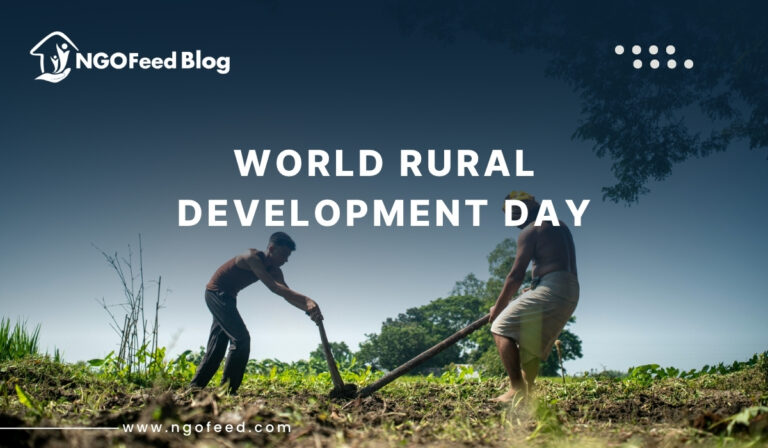
World Rural Development Day
Every year on July 6, World Rural Development Day is celebrated to draw attention to the vital role that rural communities play…