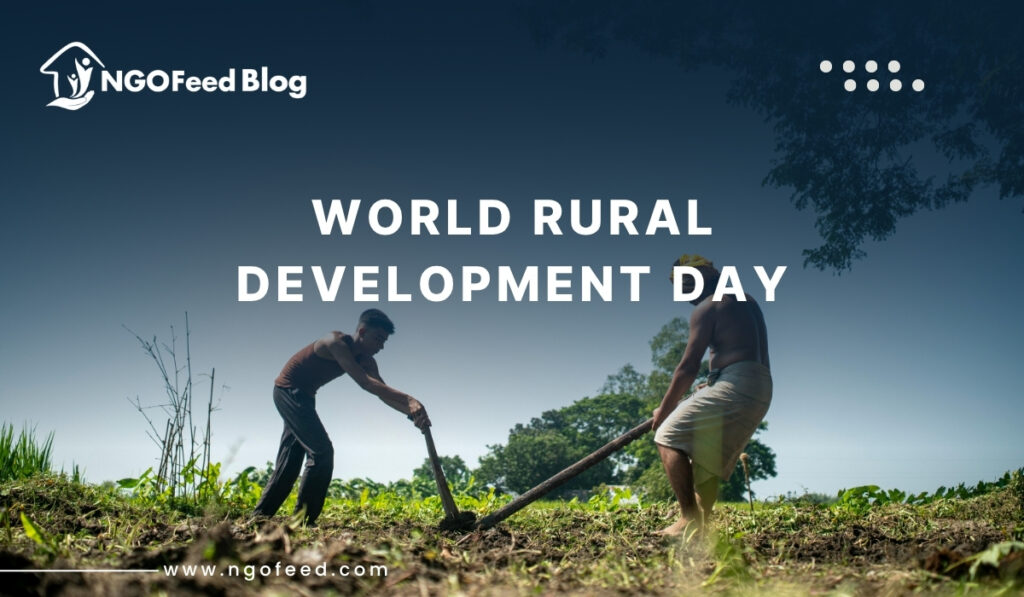
Every year on July 6, World Rural Development Day is celebrated to draw attention to the vital role that rural communities play in the social, cultural, and economic growth of countries all throughout the world. A sizable percentage of the world’s population lives in rural areas, which are also vital for agriculture, food production, environmental preservation, traditional knowledge, and cultural legacy. Many rural communities still struggle with issues such as poverty, unemployment, substandard infrastructure, inadequate healthcare, illiteracy, and limited access to technology, notwithstanding their importance.
This celebration reminds governments, businesses, non-governmental organizations, and people that sustainable development requires the upliftment of rural areas and their participation in national development. The day promotes initiatives to raise the level of living in villages and isolated areas by means of education, healthcare, employment prospects, women’s emancipation, environmental protection, and digital inclusion.
Rural existence has a subdued heroism about it. Cities frequently behave as though they developed civilization, while communities are out there producing food, maintaining languages, preserving ancient crafts, and enduring monsoon conditions that would cause an urban office worker to pass out dramatically next to a cappuccino machine.
Also Read: Rural Development NGOs
Table of Contents
History and Background
The increasing worldwide worry about inequalities between rural and urban areas gave rise to the concept of World Rural Development Day. International groups and development organizations came to understand over time that rural residents frequently found themselves shut off from economic development and modern possibilities.
Especially: The observance fits closely with the aims of the United Nations and its Sustainable Development Goals (SDGs).
- No Poverty
- Zero Hunger
- Good Quality Education
- Equal Opportunity for Women
- Sanitation and Clean Water
- Good Work and Development of the Economy
- Lowering Discrepancies
- Climate Action
Because almost half of the people in the world still live in rural regions, especially in developing nations, rural development has become a global concern. Therefore, attaining world peace, stability, and sustainable development depends on enhancing rural circumstances.
Also Read: Poverty Alleviation NGOs
Goals for World Rural Development Day
1. To Lower Rural Poverty
The day advances initiatives and policies meant to lessen poverty in distant areas and villages.
2. To upgrade rural infrastructure
It promotes improved roads, electricity, transportation, internet connectivity, hygiene, and housing facilities.
3. To Support Growth in Agriculture
Many rural economies continue to rely on agriculture as their backbone. The day stresses food security and sustainable farming methods.
4. To Encourage Country Women
Rural women frequently encounter social and financial challenges. The celebration promotes financial independence, education, and equal chances for women.
5. To advance ecological sustainability
Rural areas are intimately associated with nature. Sustainable resource management and environmental preservation are two important topics.
6. To Improve Healthcare and Educational Access
The day promotes rural areas’ access to quality education, digital learning, healthcare, and medical services.
Also Read: Rural Development
The Significance of Development in Rural Areas
Financial Relevance
Rural areas make significant contributions to agriculture, forestry, fisheries, and small-scale manufacturing. National economies are improved by robust rural economies.
Food security
Farmers and rural laborers guarantee the world food supply.
Cultural Retention
Villages protect ancient arts, languages, customs, and native knowledge systems.
Preservation of the natural environment
Many rural areas preserve rivers, forests, biodiversity, and natural ecosystems.
Social equilibrium
Equal possibilities for all people and lower migration pressure on cities are produced by balanced rural and metropolitan growth.
Also Read: Rural Welfare NGOs
Significant Difficulties Experienced by Rural Regions
Unemployment and Poverty
Many rural households have difficulty with seasonal employment and low income.
Lack of Infrastructure
Bad roads, no power, and restricted internet availability lazy development.
Obstacles to Learning
Rural schools might lack teachers, resources, and adequate infrastructure.
Healthcare Problems
Rural people frequently have limited access to hospitals, medications, and certified physicians.
Climate Change
Changing weather patterns, floods, droughts, storms, and directly influence agriculture and livelihoods.
Moving to Cities
Young people commonly abandon villages in quest of improved employment and educational prospects.
Seeing a town lose its young residents carries an eerie melancholy. one bus ticket at once. Occasionally, progress comes under the disguise of departure.
Also Read: Rural Development Sector
Governments’ Engagement in Rural Growth
Governments are vital since they enact laws and create welfare programs including:
- Rural employment initiatives
- Agricultural support
- Programs for skill development
- Campaigns for digital literacy
- Country homes initiatives
- Projects for clean drinking water
- Women’s self-help groups
- Financial integration projects
- Several projects in India aim at rural development, among them:
- Pradhan Mantri Gram Sadak Yojana
- MGNREGA
- Projects for Digital India
- National Rural Livelihood Mission
- Swachh Bharat Mission
Contribution of Non-Governmental Organizations to Rural Growth
Many non-governmental organizations interact directly with rural communities to raise living standards. Their contributions consist in:
- Encouragement of literacy and education
- providing medical care
- Helping women to be more powerful
- Promoting environmentally friendly farming
- Arranging career education
- Creating awareness of sanitation and hygiene
- Safeguarding natural resources
Many times, non-governmental organizations serve as links between governments and local populations.
How is World Rural Development Day celebrated?
The day is marked by:
- Campaigns of consciousness
- Seminars and workshops on rural development
- Tree planting campagins
- Programs for community advancement
- School and university educational events
- Agricultural displays
- Health care facilities
- Programs aimed at empowering women
- Projects to clean villages
Educational institutions also arrange debates, essay writing, poster-making competitions, and cultural events with an emphasis on rural life and advancement.
Also Read: Poverty Relief NGOs
Technology and Rural Development
Technology is changing rural areas most through:
- Online learning
- Telemedicine
- Online banking
- E-commerce prospects
- Methods of smart farming
- Weather prediction systems
- solar power options
In today’s world, digital inclusion has emerged as one of the most effective instruments for rural empowerment.
Reliable internet access in a hamlet nowadays can fundamentally alter the beat of a whole generation. Quietly, one signal bar carries scholarships, telemedicine, employment applications, and perhaps three cousins simultaneously viewing dance films.
Conclusion
World Rural Development Day reminds the globe that genuine advancement is inclusive advancement. Development should not be constrained to cities while rural areas continue to battle poverty and injustice. Villages are living communities with their own wisdom, strength, culture, and contribution to society, not backward places just waiting to become cities.
Investing in education, healthcare, infrastructure, agriculture, environmental sustainability, and women’s empowerment enables countries to create more robust and balanced civilizations. Supporting rural development means supporting humanity itself as the roots of civilization still quietly reside in rural soil.
Also Read: Rural Livelihood NGOs
Related NGO's Article Posts