Every successful NGO is built on good governance. It helps an organization to be transparent, accountable, and able to effectively carry out its mission. Eventually, however, when raising money and delivering programs, it is a strong governance structure that ensures operations are ethical, compliant and viable in the long-term.
We’ll discuss what a governance framework is, why it’s important, and what the essential components of a nonprofit’s governance framework are.
Table of Contents
What is an NGO Governance Framework?
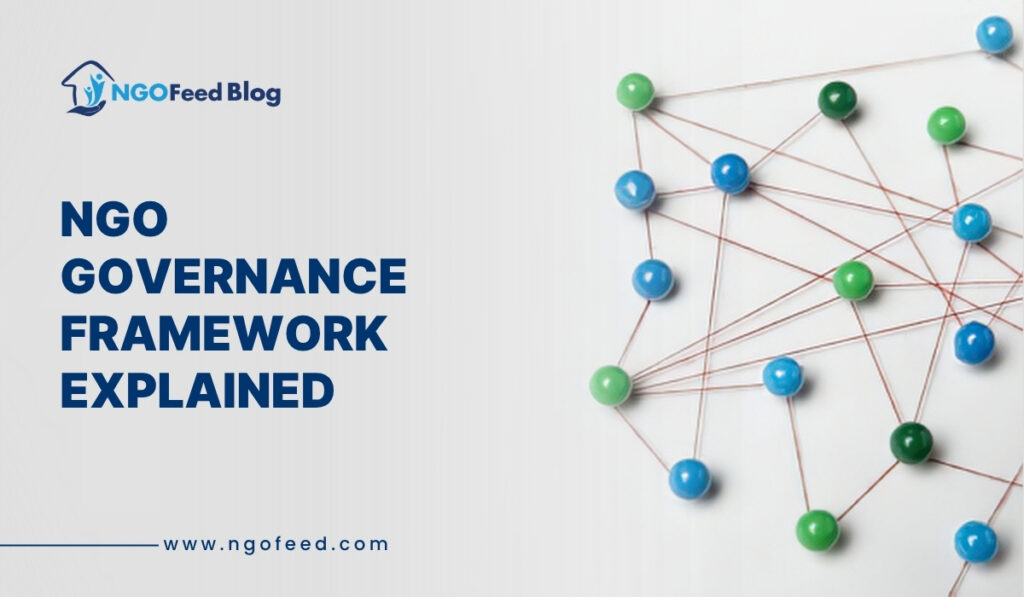
An NGO governance structure is the set of policies, structures, and processes that guide how an organization is managed and held to account. It establishes decision-making bodies, shares responsibilities, and outlines ways to ensure transparency within the NGO.
The board of directors, or trustees, high-level leadership, staff, and sometimes volunteers and advisory committees are all important components of a strong framework. The roles of each group are well defined to avoid confusion and to make decisions in the best interests of the organization.
Imagine governance as the operating system of an NGO. Projects and funding campaigns generate impact, governance provides an ethical, legal and efficient undercurrent behind the scenes.
In the absence of a governance structure, organizations can face issues of unclear roles, varying decision-making processes, and a lack of trust from stakeholders.
Also Read: Developing Strong Boards for Effective NGO Governance
The Core Principles of Good NGO Governance
While the organizational structures may differ, here are several basic principles that are common in successful NGOs.
Accountability
Clear responsibilities should be provided for all decisions. Board members, leadership teams, and staff should be aware of who’s responsible for making financial decisions, implementing programs, and making decisions about strategy.
Transparency
There is a growing demand from donors, beneficiaries, regulators and the public for NGOs to be open in their activities. Providing financial reports, governance information, and impact information helps establish credibility and trust.
Integrity
Good governance is encapsulated by ethical leadership. Conflict of interest, ethical behaviour, and responsible use of resources policies should be in place for organizations.
Participation
Good governance fosters co-operation instead of decision-making from the top. Staff, volunteers and members of the community need opportunities to provide feedback and to assist in the continuous improvement of the organization.
These values foster a culture of trust and accountability, which is embedded in daily activities.
Key Components of an Effective Governance Framework
A governance system consists of a number of interrelated components that sustain an NGO.
Board Governance
The board gives strategic direction, checks and balances leadership and helps keep the organization on track with the mission.
Policies and Procedures
Finance, HR, procurement, safeguarding, risk management and ethics policies are well developed and consistent throughout the organization.
Financial Oversight
Internal control, budgeting, financial reporting and regular audits safeguard organizational resources and build donor trust.
Risk Management
All NGOs are subject to risk – financial, operational, legal, reputational. A governance process should involve identifying and managing these risks.
Monitoring and Evaluation
Governance is not limited to the development of policies. Governance processes need to be regularly reviewed, and governance outcomes need to be measured and adjusted in response to changes.
All of these together form a structure that sustainably supports responsible decision-making.
Also Read: Building Effective Leadership Boards for NGOs
Common Governance Challenges NGOs Face
Establishing a governance structure is only part of the job; sustaining it is the other.
As many NGOs grow, they face governance issues.
Popular problems are:
- Ambiguous relationship between the board and management
- Limited financial oversight
- Outdated policies
- Inadequate decisions documentation.
- Weak succession planning
- Infrequent board meetings
- Failure to monitor compliance violations.
One difficulty is that governance is ‘on paper’. Some organizations do have policies to comply with, but they don’t necessarily enforce them.
Governance gaps can also be exposed through rapid organizational growth. When new programs, staff and funding sources are added, it is possible that the existing systems may not be adequate.
If these issues are identified promptly, NGOs can build organizational governance before it reaches a stage where it impacts performance or donor confidence.
Best Practices for Strengthening NGO Governance
Good governance is not a policy; it is an ongoing process and practice.
To boost governance, some good strategies for NGOs are:
Maintain clear expectations of roles.
It is essential that everyone in the organization (board members and staff members) be aware of their responsibilities and decision-making power.
Review Policies Regularly
Governance policies will be revised in line with changes in legislation, organizational development and new risks.
Expansion of Board Development is essential.
Board orientation and training are regular and enable board members to make informed decisions and effectively carry out their duties.
Promote Transparency
Provide an annual report, financial statements, governance information and impact updates to stakeholders as appropriate.
Encourage Accountability
Develop performance monitoring, documentation, and organizational effectiveness systems.
Ultimately, governance should enable – rather than impede – the NGO’s mission. The best NGOs view governance as a continuous effort and not a single event.
Also Read: Strengthening NGO Boards for Better Governance
Conclusion
No matter the size or scope of an NGO’s activity, a robust governance structure is crucial. It offers the framework for making decisions, responsibly managing resources, and holding oneself accountable to donors, recipients, and regulators. Through clear roles, transparent policies, robust financial oversight and ongoing governance practice oversight, non-profit organizations can develop a stronger, more effective organization that can have a greater impact over time. Good governance is not just about compliance; it’s about establishing a culture of responsibility, trust, and sustainable governance.
FAQs
1. What is an NGO governance framework?
An NGO governance framework is a set of rules and procedures that outline how an NGO is managed and governed.
2. Why is governance important for NGOs?
Effective governance increases transparency, enhances accountability, facilitates compliance with laws, and fosters trust amongst donors, beneficiaries and stakeholders.
3. Which individuals or organizations are responsible for the governance of NGO?
The principal role of governance is to be carried out by the board of directors/trustees, with the backing of senior management and the organization’s policies.
4. What are the fundamentals of good governance of an NGO?
The principles are accountability, transparency, integrity, participation and responsible decision-making.
5. What are the ways in which NGOs can strengthen their governance structure(s)?
By establishing clear roles and responsibilities, regularly updating policies, enhancing financial management, training board members, and fostering transparency, NGOs can contribute to strengthening governance.
Related NGO's Article Posts