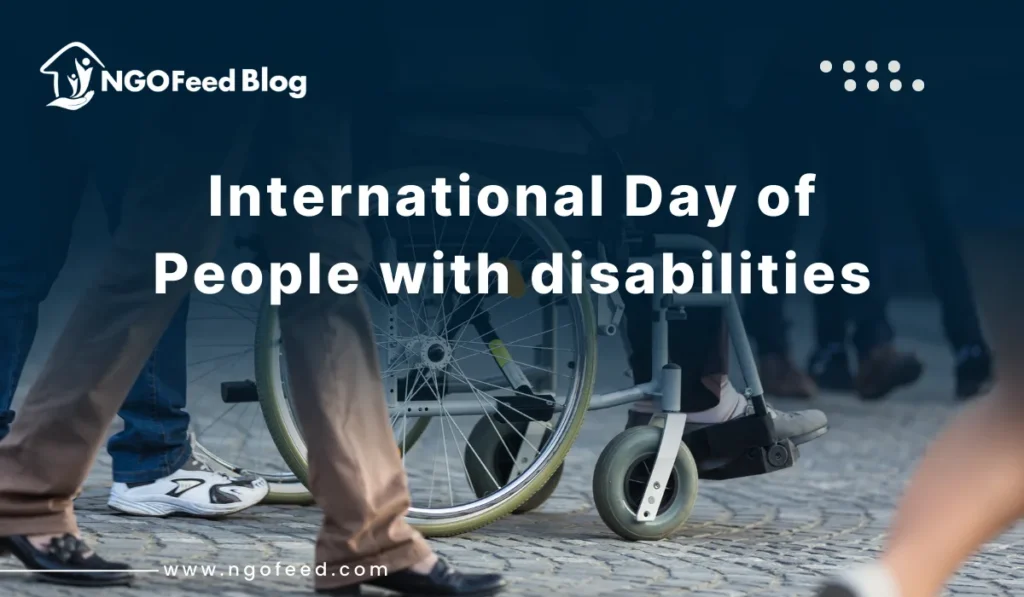
Every year on 3rd December, the world pauses to recognize something deeply important, the rights, dignity and lived experiences of persons with disabilities. The International Day of Persons with Disabilities (IDPD) is not just a global observance, it is a reminder of the humanity, strength and potential that often goes unnoticed behind labels or assumptions.
This day encourages us to look beyond disability and see people, their stories, their challenges, their achievements and their dreams. It’s about building a society where everyone, regardless of ability, feels valued, included and empowered.
Table of Contents
What Is the International Day of Persons with Disabilities?
IDPD was first proclaimed by the United Nations in 1992 to create awareness about disability issues and to support the rights and well-being of persons with disabilities across all parts of life, education, healthcare, employment, community participation and dignity.
At its core, this day is an invitation to rethink how society views disability. It pushes us to recognize that disability is not an individual’s limitation, it is often the result of environments that aren’t designed with everyone in mind.
Also Read: Role of NGOs in Disabled Person
Why This Day Truly Matters?
There are more than 1.3 billion people globally living with some form of disability, that’s nearly one in six people. When we talk about persons with disabilities, we’re talking about our families, friends, classmates, colleagues and neighbors.
This day matters because:
- It brings visibility to real challenges that often remain hidden, inaccessible spaces, social stigma and unequal opportunities.
- It encourages empathy over sympathy and inclusion over tokenism.
- It highlights that disability is part of human diversity and not something that should hold anyone back from living a full and dignified life.
Most importantly, IDPD reminds us that equal opportunities are not special privileges, they are basic rights.
The 2026 Theme: Why It Speaks to All of Us
As of now, the International Day of Persons with Disabilities 2026 Theme has NOT been officially announced by the United Nations.
Also Read: Role of NGOs in HIV and AIDS Awareness and Prevention
Understanding the Diversity of Disability
Disability is not one type, one appearance or one experience. It includes a wide range of conditions, physical, sensory, cognitive, intellectual, mental health-related, congenital, acquired, visible and invisible.
Some disabilities can be seen, Many cannot.
This diversity is exactly why inclusion must be thoughtful and flexible. Everyone’s needs, abilities and strengths are different, and recognizing this is the first step toward creating environments where everyone can thrive.
Breaking Misconceptions
Even today, many people carry assumptions like:
- “Disabilities are always visible.”
- “People with disabilities always need help.”
- “Only a few people experience disability.”
These misconceptions can be more limiting than the disability itself. When we challenge these outdated beliefs, we make room for respect, independence and equal participation.
Also Read: Role of NGOs in Cancer Care
The Challenges That Still Exist
Despite progress, persons with disabilities continue to face barriers that many people don’t even notice:
- Buildings without ramps or accessible toilets.
- Schools without trained special educators or supportive tools.
- Workplaces reluctant to hire persons with disabilities.
- Healthcare systems that are not disability-friendly.
- Social stigma that isolates individuals from opportunities.
These challenges show why IDPD is still so relevant today, true inclusion requires consistent action, not just awareness.
The Role of NGOs, Communities and Technology
NGOs and Community Support
NGOs play a crucial role in filling gaps by:
- Providing mobility aids and assistive devices
- Running awareness programmes
- Offering skill-building and education support
- Advocating for equal rights and accessible infrastructure.
They often become a lifeline for families and individuals who need guidance, support and empowerment.
Also Read: Role of WHO in Healthcare
Technology as an Equalizer
Assistive technologies, screen readers, braille displays, hearing devices, mobility tools and AI-based accessibility features, have helped level the playing field for many. With innovation and thoughtful design, technology continues to make independence more achievable for persons with disabilities.
How We Can Build a More Inclusive World?
Inclusion is not the responsibility of one group, it’s something we all contribute to. Some simple but meaningful steps include:
- Designing public spaces that are accessible to all.
- Supporting inclusive education from early childhood.
- Creating workplaces that welcome diverse abilities.
- Using respectful, person-first language.
- Listening to the voices and experiences of persons with disabilities.
- Supporting NGOs through volunteering, advocacy or awareness.
Every action, even a small one, helps someone feel more seen, understood and included.
Also Read: Role of NGO in Food and Nutrition
Conclusion
The International Day of Persons with Disabilities is more than an observance, it is a call for compassion, awareness and meaningful change. It asks us to create a world where persons with disabilities are not treated as exceptions, but as equal members of society with talents, rights and dreams.
As we reflect each year on 3 December, let us remember that inclusion starts with understanding and grows through consistent action. When we build a society that embraces every individual, we don’t just empower persons with disabilities, we strengthen humanity as a whole.
Related NGO's Article Posts