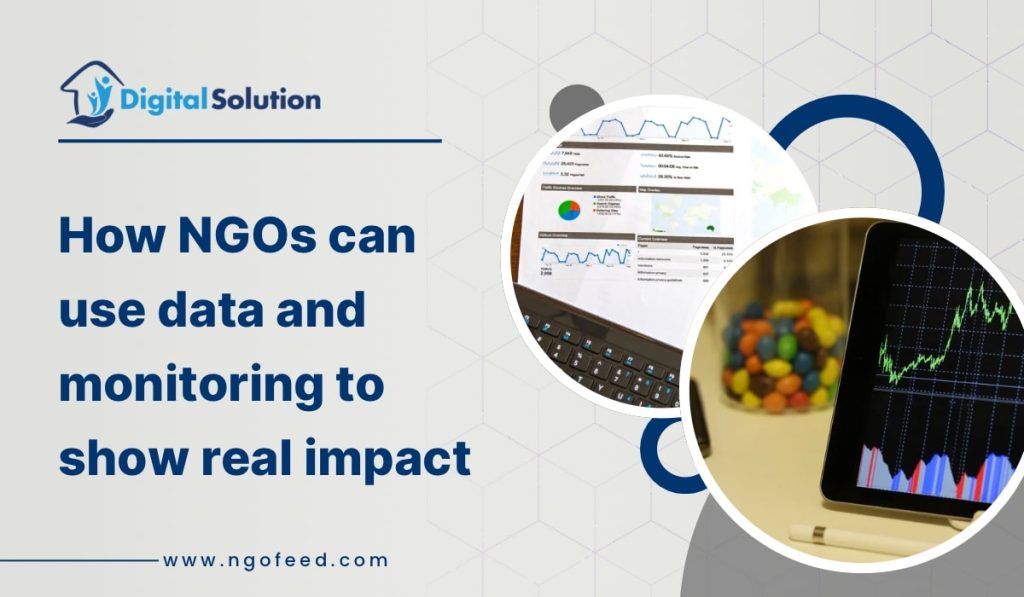
How NGOs use Data and Monitoring Tools to Show Real Impact: In a world where every action is measured, NGOs are judged on what they say they do, not just what they promise to do. Donors, CSR partners, volunteers, and beneficiaries are increasingly looking for evidence of real, lasting change. That’s why data and monitoring tools are becoming indispensable for NGOs. When used properly, data can help NGOs go beyond activity reporting and actually demonstrate impact and accountability. It’s the only way to tell real stories that are supported by evidence.
Table of Contents
NGOs Need Data-Driven Impact Measurement
The social sector is becoming more competitive. Many NGOs are working on the same issues, such as education, health care, women’s empowerment, livelihood development, and human rights. The one thing that sets a credible NGO apart is its ability to demonstrate impact through data.
NGOs use M&E tools to:
- Build trust with donors
- Strengthen CSR partnerships
- Improve program effectiveness
- Expand funding opportunities
- Increase public accountability
In short, impact measurement is not a nice-to-have for NGOs. It’s a must-have for sustainability.
Data in NGOs Is About People, Not Just Numbers
Some people think that the use of data in Social Work has created a disconnection with individuals because everything is reduced to numbers; however, using data allows Social Workers to connect directly with the individual that the data point represents, allowing them the opportunity to listen and understand.
NGOs using data enable them to evaluate their performance on an ongoing basis, identify strengths and weaknesses and create a plan of action to provide maximum assistance to the populations they serve.
Types of Data that NGOs should collect to measure their impact on society
1. Baseline Data – where do we stand now?
Baseline data are collected at the start of a project and establishes where you are currently. For example: what is your literacy rate, income level & health status? If you do not collect baseline data, there will be no way for you to measure improvement for the individuals receiving assistance as a result of the new project.
2. Output Data – What have we done, how many people have received assistance from us?
Output data presents the data on everything an NGO has accomplished during the life of the project, such as the number of people served by the NGO, the number of workshops conducted by the NGO (i.e. training/education for beneficiaries), the number of meals serving, the number of health clinics organized and run, etc. Output data provides the quantity of services provided by an NGO, but the utilization of output data does not permit an evaluation of the outcome or positive effects of these services.
Also Read: Open Data for Nonprofits: Driving Transparency, Innovation, and Social Impact
3. Outcome Data – Have we changed lives?
Outcome data allows you to see whether the work of your NGO has improved lives by measuring the effects of the NGO’s activities on individuals and the overall project, such as school retention rates, increased income, better health, and higher degrees of self-sufficiency for beneficiaries. Outcome data provides the strongest proof for the impact of your NGO on the communities you serve.
Simple Monitoring Tools NGOs Can Use Effectively
You can track your NGO’s impact without having to purchase expensive software or pay an expensive consultant. There are many free and low-cost software options available.
FREE Software Options:
1. Google Forms & Google Sheets:
These tools are great for grassroots NGOs as they allow you to efficiently collect surveys, beneficiary feedback and volunteer reports.
2. Mobile Data Collection Tools:
KoboToolbox and ODK (Open Data Kit) are two platforms that allow for offline mobile data collection and are especially useful in areas where internet connections may be intermittent or low.
3. Management Information Systems (MIS):
Once an NGO begins to grow, it is important to centralize all of its data into one location. An MIS does this by allowing you to collect and report on your data across all of your programs, locations, and time periods.
Also Read: How NGOs Can Leverage Data Analytics?
4. Visual Documentation:
By incorporating visual documentation into your reports and digital campaigns, you can enhance them. Photos, videos and testimonials that use visualize data can help people relate to the data and be more engaged with it.
Using Data to Improve NGO Programs – Not Just Proving Them
The real potential of data is that it provides a way to learn from and adjust to the changing needs of the communities that NGOs serve. When NGOs analyze the monitoring data that they collect on a regular basis, they can:
- Identify under-performing programs
- Make adjustments to their strategies on a ‘real-time’ basis
- Increase their ability to retain beneficiaries
- Create a long-term impact on the community
- Data helps NGOs to respond to a community’s needs rather than reacting to them.
Using NGO Data to Create Powerful Impact Stories
Let’s face it… Most people are inspired by stories, not just statistics. NGOs should combine the human side of their programs with the impact data they have collected to create ‘story-like’ narratives. By doing this, NGOs improve their online visibility, increase donor outreach and expand the reach of their social media content.
For example:
Instead of “300 women trained,”
share how one woman’s income changed, supported by data.
This blend of data-driven storytelling significantly improves audience trust and engagement.
Also Read: The Importance of Data Driven Decisions for NGOs and Best Practices
How to Leverage Data to Create Positive Long-Term Relationships between Donors and CSR Partners?
Building donor confidence through transparent impact reporting is an essential requirement for CSR Partners and the requirements of CSR Partners in evaluating an NGO’s impact Reporting are:
- Outcomes that can be measured.
- Clear, easy-to read, reporting.
- Ethical data collection methods.
- Replicable impact models.
The use of monitoring tools increases the chances of sustainability via repeat funding and institutional support for NGOs.
Using Ethical Data to Protect Beneficiaries Dignity and Privacy
Responsible data collection and use of data is of utmost importance. All NGOs must obtain:
Informed Consent from Beneficiaries.
Confidential Privacy and Handling of Their Data.
Respectful storytelling.
Do not exploit these funds for your fundraising efforts.
The implementation of ethical data practices will increase credibility and community trust.
How Can We Use the NGOFeed Platform to Highlight an NGO’s Verified Impact?
There are several platforms (like NGOFeed) that allow an NGO to create content that is readable, SEO Friendly, and will enable the NGO to connect with Donors, Volunteers and CSR Professionals in a more meaningful way. By blending the use of data with storytelling, the Digital Availability and Visibility of the NGO’s Impact will improve.
Also Read: Digital Dividends: How NGOs Are Leveraging Technology to Maximize Social Impact
To Conclude, Using Data to Make the NGO Impact Mattered and Existent.
At the centre of all NGO work is People, however to effectively continue with all NGO work it is essential to Manage, Measure, Communicate and Have Confidence in the impact they produce as a result of their efforts. The more an NGO uses data, accountability and monitoring tools with empathy and transparency, will not only verify your success but also develop confidence, collaborative partnership and sustainable impact.
Real impact deserves to be seen, understood and supported.
Frequently Asked Questions (FAQs)
1. Why is impact measurement important for NGOs?
Impact measurement helps NGOs understand whether their work is actually improving lives. It allows organisations to move beyond activity-based reporting and show real change in communities. For donors and CSR partners, impact data builds trust, transparency and confidence that their support is creating meaningful outcomes.
2. What kind of data should NGOs collect to show real impact?
NGOs should collect a mix of baseline data, output data and outcome data. Baseline data shows the situation before intervention, output data tracks activities and reach and outcome data measures actual change in beneficiaries’ lives. Together, these provide a clear and credible picture of impact.
3. Do small NGOs need expensive monitoring tools?
No. Many effective data and monitoring tools for NGOs are low-cost or free. Tools like Google Forms, Google Sheets and simple mobile data collection platforms are enough for most grassroots organizations. What matters more than technology is consistency and ethical data collection.
4. How can NGOs use data without losing the human element?
Data should support stories, not replace them. When NGOs combine numbers with real-life experiences, testimonials and visuals, impact becomes more relatable and powerful. Ethical storytelling backed by data helps audiences connect emotionally while still trusting the facts.
5. How does data improve donor and CSR partnerships?
Transparent impact data reassures donors and CSR partners that funds are being used responsibly. Regular monitoring and clear reporting increase accountability, improve repeat funding chances and strengthen long-term partnerships by demonstrating measurable outcomes.
Related NGO's Article Posts