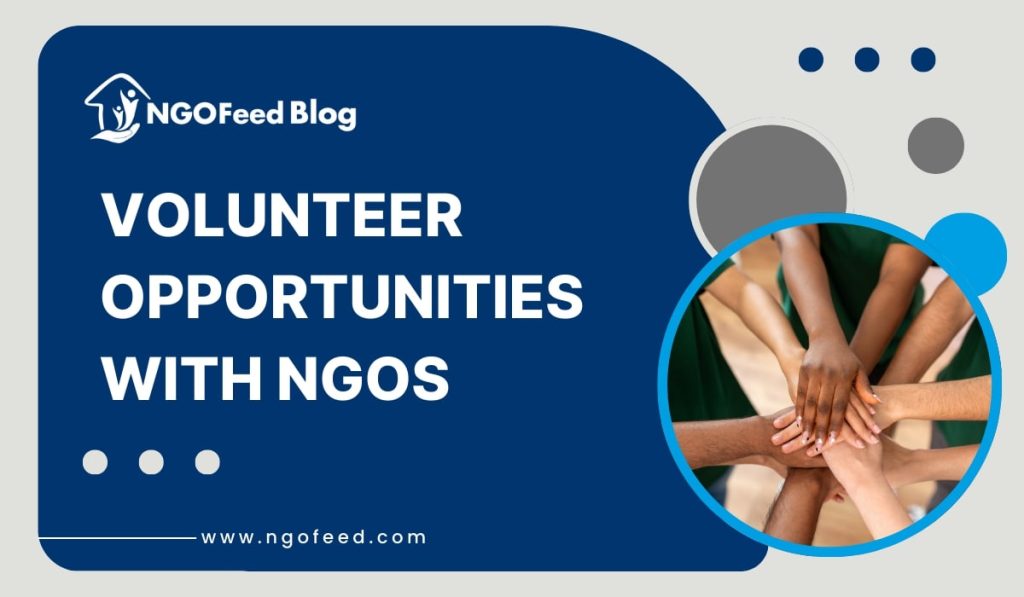
Volunteer Opportunities with NGOs: Volunteering for an NGO is not just an act of giving time, but joining a movement that brings about lasting and significant change. In India, NGOs are working tirelessly on issues such as education, health, environment, gender equality, relief, and development. There are passionate, skilful and empathetic volunteers behind all successful initiatives.
Volunteering presents an effective means of creating social difference to those who want to do so. NGOs offer a wide range of opportunities to participate, whether it is teaching children in underprivileged communities, aiding the awareness campaign, helping with the research and the gathering of the data, or offering such professional skills as writing, design, or technology. These positions not only empower the NGO programs but also ensure that volunteers acquire a good experience, create networks as well and acquire a better insight into social problems.
The government does not have to be geographically constrained in offering volunteer opportunities in the digital age that the world is going through today. NGOs are increasingly providing remote and flexible forms of volunteering, so people who are not of different backgrounds can also be useful.
This article will examine the types of volunteering opportunities that are offered by NGOs, who may volunteer and how people can get a job that suits them and their abilities. Through volunteering, you are not merely contributing to the cause but a change agent, as you enable the communities to become stronger and more resilient.
Table of Contents
Why Volunteering with NGOs Matters
NGOs are impactful because of volunteering to engage in direct contributions to social change and empowerment of communities at the grassroots level. NGOs have a tendency to operate with few resources available, and volunteers are important in increasing their coverage, enhancing service delivery and contributing to the long-term development programs.
There are several important reasons why volunteering with NGOs is really important, and they include:
- Empowering Community Impact: Volunteers enable NGOs to take into account more beneficiaries, conduct programs successfully, and react swiftly to local demands.
- Supporting Critical Causes: Educating the world and providing medical aid to those in need, cleaning the environment and providing aid during the disaster, the volunteers are involved in the causes which solve the urgent social tasks.
- Developing Trust at the Grassroots: Frequent contact between the volunteers and the communities helps establish trust, participation and more inclusive solutions.
Volunteering is not a fruitful endeavour as far as NGOs are concerned; it is also a life-changing experience for people. Through close collaboration with the various communities, volunteers could get a real-life experience of what is happening in the real world and acquire empathy, cultural sensitivity and problem-solving capabilities.
- Personal and Professional Development: Volunteers acquire professional experience, skills in leadership, and get familiar with the social sector.
- Skill-based Contribution: Experts may contribute their experience in such areas as teaching, communication, technology, research or fundraising.
- Active Citizens: Volunteering promotes long-term participation and social responsibility in community development.
In the end, volunteering at NGOs will form a mutual experience of education and change – people and organizations collaborate to form a more caring, fair, and resilient society.
Types of Volunteer Opportunities Available
The range of volunteer opportunities provided by NGOs is very diverse and, as a result, one may participate depending on their interests, availability, and his/her skills. These functions are meant to facilitate both those operations that happen on the ground and those that occur behind the scenes so that all the contributions, whether big or small, have a significant effect.
Numerous NGOs make use of volunteers on the ground. These are the jobs where a person deals directly with communities and should be taken by individuals who like working with their hands and communicating. Volunteers can be used in teaching programs, health campaigns, creating awareness or in environmental clean-up programs.
Besides fieldwork, NGOs are also beginning to appreciate skill-based volunteering where professionals use their expertise to build organizational capacity. This type of volunteering will allow NGOs to work more effectively and cover broader audiences.
Examples of common volunteer opportunities are:
- Education & Mentorship: Instructing, tutoring or mentoring children/youth.
- Healthcare: & Outreach: Helping with health camps, nutrition programs, or awareness.
- Environmental Action: Tree plantation, waste management drives and sustainability projects.
- Digital/Creative Support: Social media management, data analysis, graphic design, or content writing.
- Fundraising & Research: Support campaign, outreach to donors, impact documentation.
There is also the growth of remote and flexible volunteering with the growth of digital platforms, where people can help irrespective of location. Such a variety of opportunities guarantees that any person who is ready to volunteer will be able to get a job that suits their passion and helps an important cause.
Who Can Volunteer and What Skills Are Needed
NGOs’ volunteer work is not exclusive, but it is open to all kinds of people. The desire to give up time, effort and compassion to a common cause is what counts most. Diversity is a virtue of NGOs, which appreciate various points of view and experiences, because it empowers programs and outreach.
Students and Young Adults: Students would be full of life, creativity, and enthusiasm to learn. Volunteering enables them to have real-life exposure, leadership skills, and social issues outside of schooling. Most of the non-governmental organizations provide flexible positions that fit in with academics.
Working Professionals: Professionals are able to offer specialized skills like teaching, creating content, finance, legal support, technology, or project management. Skilled volunteering enables NGOs to enhance efficiency in addition to providing professionals with a valuable means of repayment.
Homemakers and Retirees: people possessing time and experience in life are useful in community activities, mentoring, and program support. Long-term initiatives are often reinforced because of their consistency and commitment.
Skills and Qualities: NGOs require technical skills, but soft skills such as empathy, communication, adaptability, and teamwork are important. It is commonly more important to be willing to learn and to respect the context of the community than previous experience.
Finally, volunteering is not so much about qualifications as about intent and duty. The contribution of people with different backgrounds and the donation of their skills and time are more than advantageous, as NGOs can build an inclusive and sustainable impact.
“How to Get Started: Finding the Right NGO Opportunity”
Finding the appropriate NGO to volunteer with is a serious step towards making your time and hard work really count. An appropriate match is one that has not only the desired advantage to the organization, but also provides you with a satisfying and rewarding volunteering experience.
Determine Your Interests and Availability: Start by considering the reasons why you are interested in the causes and the amount of time you have available. Be it short-term or long-term engagements, clarity will be able to streamline the opportunities available.
Evaluate Your Skills and Strengths: Think about what you can contribute: teaching, communication, research, technology or community outreach. Even the simplest, such as coordination and teamwork, are useful to NGOs.
Credible NGO Research: Find organizations that have clear missions, programs and that have clear volunteer policies. By visiting NGO websites, social media account pages, or even volunteer sites, you may get to understand their impact and credibility.
Carefully consider the Role Expectations: The volunteer role must be reviewed beforehand to determine what is needed, what training is required and what results are expected. This will help to match your expectations with the needs of the NGO.
Apply and Be Consistent: Once you have been selected, treat volunteering like a regular job. Openness, desire to learn, and respect for the contexts of communities contribute to an excellent and meaningful experience.
Being an NGO volunteer does not involve seeking the ideal placement but making the initial leap of taking part in significant change and developing alongside the communities you are working with.
Frequently Asked Questions (FAQs)
1. Who is eligible for volunteering with an NGO?
Any individual interested in donating their time and efforts to help others is eligible for NGO volunteering. This includes all people of all different lifestyles and backgrounds – students, professionals, homemakers, retirees, as well as those who are brand new volunteers.
2. Do I need experience before volunteering?
Not necessarily. Most NGOs will offer basic training to new volunteers, and often value enthusiasm and dedication over experience level. Specific skill roles typically call for a specific level of expertise, but most general volunteer positions are open to anyone.
3. How much of a time commitment do I have to offer?
Time commitments will differ based on the specific volunteer position. A few hours a week will be required only for a handful of volunteer opportunities, while other volunteer positions will require an all-day or longer commitment. Most NGOs also offer volunteers the option of working from home or working with flexible hours.
4. Can I volunteer from home with an NGO?
Yes! There are numerous remote volunteer opportunities available through many NGOs, including writing articles, marketing, and community outreach.
5. How do I determine the best NGO to volunteer for?
The best NGO for you is going to depend on your passions and beliefs. Always check with the NGO for verification of its legitimacy, along with their level of transparency and how they support their volunteers; this way, you can assure yourself that your volunteer experience will be fulfilling and impactful.
Related NGO's Article Posts