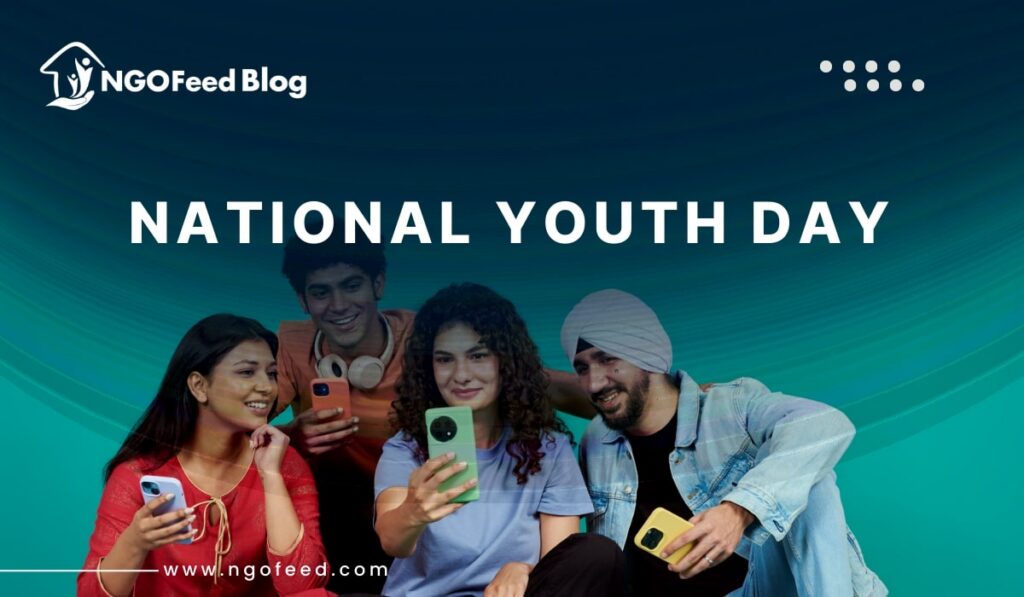
Arise, awake and stop not till the goal is reached.” — Swami Vivekananda Every year on 12 January, India celebrates National Youth Day, a special occasion dedicated to recognising the energy, potential and leadership of young people across the country. This day marks the birth anniversary of Swami Vivekananda, a great spiritual thinker, philosopher and reformer whose ideas continue to inspire generations. His unwavering belief in the potential of youth as the driving force of social transformation makes this day a powerful reminder of the role young people play in nation-building and societal progress.
For him, “Education is not the amount of information that is put into your brain and runs riots there, undigested all your life. We must have life-building, man-making, character-making, assimilation of ideas.” It is rightly said that, “The Swami’s mission was both national and international. A lover of mankind, he strove to promote peace and human brotherhood on the spiritual foundation of the Vedantic Oneness of existence.
A mystic of the highest order, Vivekananda had a direct and intuitive experience of Reality. He derived his ideas from that unfailing source of wisdom and often presented them in the soul-stirring language of poetry.
Table of Contents
Why 12 January Matters?
Swami Vivekananda was born on 12 January 1863 in Kolkata. From an early age, he showed deep curiosity, intellect and empathy for humanity. He later became a disciple of Sri Ramakrishna Paramahansa and devoted his life to spreading spiritual wisdom, universal brotherhood and selfless service.
The Government of India, recognizing the incomparable impact of his thoughts and teachings on India’s youth, declared 12 January as National Youth Day in 1984. Since 1985, this day is celebrated each year to encourage young people to draw inspiration from his life, character, and philosophy.
Swami Vivekananda’s messages, both spiritual and practical are rooted in courage, self-confidence, service and resilience. His famous call to “arise, awake and stop not till the goal is reached” continues to resonate with youth as a guiding principle in personal and social life.
Contributions on National Youth Day
His famous quotations include, “Arise, awake and stop not till the goal is reached.” He also added that anything making a child physically, intellectually and spiritually weak must be rejected as a poison. He also emphasized on an education that leads to character formation.
His establishment of “Ramakrishna Math” and “Ramkrishna Mission” was a sign of “Guru Bhakti”, his sacrifice, austerity, and service of the poor and the downtrodden people of India. He was also a founder of Belur Math.
He spread the message of divinity and the true aims of scriptures. This great patriotic monk of Mother Earth took his last breath on 4th July 1902 at Belur Math.
Also Read: Role of NGOs in Youth Empowerment
What is National Youth Day 2026?
The National Youth Day on 12th January is celebrated every year in commemoration of Swami Vivekananda, whose unwavering belief in the potential of youth continues to resonate deeply with young citizens of the country.
His inspiring life and empowering message urge the youth to nurture their dreams, unleash their energies, and shape a future worthy of his envisioned ideals, much in line with the vision – Viksit Bharat @2047 as propounded by the Hon’ble Prime Minister, Sh. Narendra Modiji. On 12th January 2024, the occasion of the 161st Birth Anniversary of the Swami Vivekananda, NYKS will kick start a week long grand celebration across all the districts of the country.
Objectives of Youth Day
To generate awareness about the life and message of Swami Vivekananda to inspire and motivate youth to participate in nation-building.
- To involve youth in various activities on the themes of Youth Week to promote the spirit of service and volunteerism.
- Celebration of National Youth Day on 12th January 2024
- Duration: 1 day (12 th January,2024)
- Coverage: 763 Districts
- Budget: Rs. 40,000 per District
History of the day
In 1965, the United Nations General Assembly initiated a program aimed at engaging young adults. They supported the Declaration on Promoting Peace, Mutual Respect, and Understanding among Youth and started allocating resources to empower young people. This included recognizing emerging leaders and providing them with the tools needed to address global challenges. In 1999, the UNGC approved the recommendation from the World Conference of Ministers Responsible for Youth, leading to the establishment of International Youth Day. The first commemoration of this day took place on August 12, 2000.
Empowerment and Resources
The day underscores the importance of empowering youth by providing them with the necessary resources for their development. Initiatives often include workshops, concerts, and cultural events that allow young people to express their concerns and achievements while fostering their growth.
Also Read: Role of NGOs in Girl Child Education
Advocacy for Participation
International Youth Day advocates for increased participation of youth in decision-making processes at local, national, and international levels. It highlights the necessity of giving young people a voice in policies that affect their lives, thus promoting civic engagement and leadership
Celebrations and Activities
National Youth Day is observed with wide participation across India. Schools and colleges come alive with discussions and workshops centred around Vivekananda’s life and teachings. Students engage in essay writing, debates, recitations and presentations that reflect on his views about education, self-confidence and social service. Many institutions also organize yoga sessions, meditation gatherings and spiritual discourses to honour his holistic vision of development. These programmes not only educate young minds about the philosophical depth of Swami Vivekananda’s thought but also reinforce values such as discipline, leadership, creativity and universal harmony values that are crucial in today’s rapidly changing world.
Role of Youth in Nation-Building
At its core, National Youth Day is a celebration of youth as a powerful force for progress. The youth of India, embodying energy, innovation and optimism, are seen as catalysts for positive change. On this day, young people are encouraged to reflect on their responsibilities, not just to themselves but to society at large.
Whether through entrepreneurship, community service, education, environmental stewardship or cultural expression, young leaders are urged to contribute meaningfully to the nation’s development. This reflects the optimistic spirit that Swami Vivekananda believed youth should embody, not only dreaming big but also working hard with conviction and clarity toward those dreams.
Observance of National Youth Day in India
On National Youth Day, various events and activities take place across the country to celebrate the vibrancy and enthusiasm of the youth. Educational institutions, government bodies and NGOs organize seminars, workshops, cultural programs and discussions centered around Swami Vivekananda’s teachings. These events focus on instilling a sense of national pride, social responsibility and spiritual values among the youth.
Additionally, National Youth Day encourages physical fitness and sports activities, promoting a healthy lifestyle and teamwork. Youth clubs, colleges and universities actively participate in rallies and campaigns addressing issues such as education, employment, environment, and social justice.
Government and Community Engagement
In recent years, government initiatives have aligned with the spirit of National Youth Day by creating platforms that elevate the voices and ideas of youth. In early 2026, initiatives such as the Viksit Bharat Young Leaders Dialogue brought together thousands of young change-makers who engaged with national leaders on pressing issues including technology, sustainability and social empowerment. Participants were able to present their ideas directly to policymakers, reinforcing the importance of youth participation in shaping national priorities.
Such engagements not only amplify youth perspectives but also strengthen policy conversations with fresh insights from the ground. This blending of grassroots experience with national strategy exemplifies how modern India is embracing youth contributions at multiple levels.
Role of NGOs in empowering India’s youth
NGOs play a crucial role in empowering the youth of India by addressing various challenges they face including education, unemployment, poverty and social inequality. On National Youth Day, let’s explore how NGOs work toward creating an enabling environment that fosters personal and collective development among the youth.
How to Celebrate International Youth Day?
International Youth Day acts as an opportunity for youth to express their thoughts and opinions. Given below are some of the ways that you can show your support and celebrate this day:
Attend Youth Camps
You can show appreciation and support by attending an International Youth Day event. These events usually have concerts, parades, sporting events, mobile exhibitions, etc., that highlight the achievements of the youth population.
Also Read: Role of UNESCO in Education
Play Your Part
Education is the most valuable thing we can offer the younger generation. Consider mentorship programs and look into how you can impart knowledge and skills. There are several big brother/sister programs, music programs, and assisted speech therapy programs that you can consider.
Participate in Intergenerational Discussions
You can engage in forums and discussions between adults and the youth population. Try to come up with topics related to the year’s theme, and pay attention to the thoughts and ideas of the young generation.
Inspiration for NGOs and Civil Society
For NGOs and civil society organizations, National Youth Day is both a celebration and a call to action. These organizations often work at the frontline of youth development, facilitating training, mentorship, career support, community engagement projects and leadership programmes that extend beyond the classroom. NGOs help bridge gaps by enabling young people, especially those from marginalized or underserved communities, to access opportunities for growth and empowerment.
By collaborating with schools, government bodies and community groups, NGOs ensure the spirit of Swami Vivekananda’s teachings reaches diverse groups, reinforcing resilience and capability among youth while promoting values such as social justice, equality and service.
Conclusion
National Youth Day on 12 January stands as a testament to the power, potential and passion of India’s young generation. It is a day that honors Swami Vivekananda’s timeless vision, one that encourages youth to pursue excellence, cultivate inner strength, embrace responsibility and serve humanity with courage and compassion.
As the nation observes this day each year, it reinforces a shared belief, that when youth are inspired, equipped and empowered, they become the architects of a brighter, more inclusive and more prosperous India.
Related NGO's Article Posts