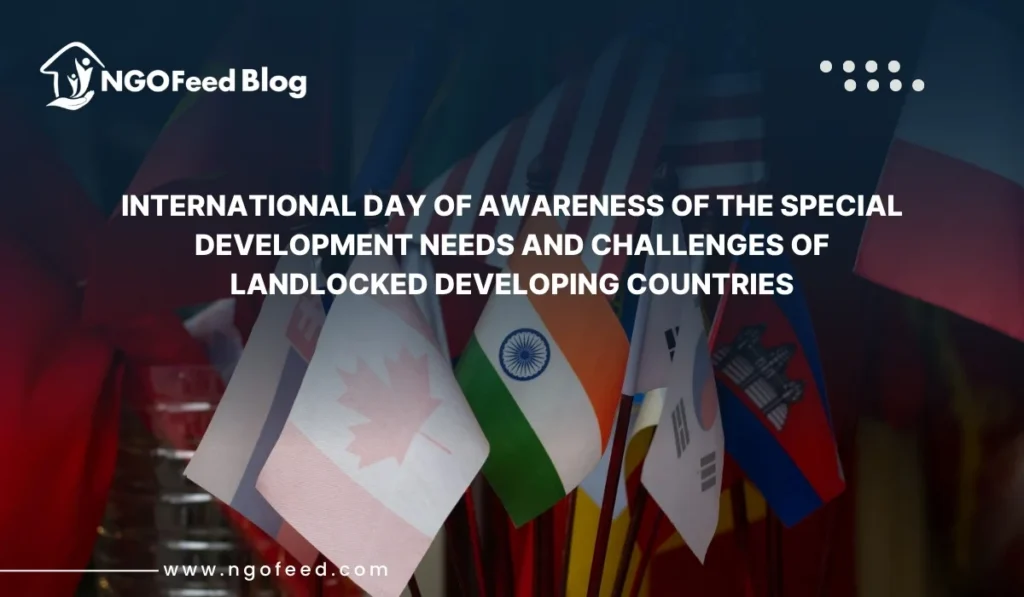
Every year on August 6, the International Day of Awareness of the Special Development Needs and Challenges of Landlocked Developing Countries is held to bring attention to the economic, social, and geographical problems that Landlocked Developing Countries (LLDCs) face. Direct access to the sea is lacking in these countries, which severely hinders trade, transportation, economic development, and international connection.
Lacking coastal access, LLDCs usually rely on nearby nations for entrance to ports and international markets. This reliance raises transportation expenses, slows commerce, and expose these nations more sensitive to political unrest, border restrictions, and economic interruptions. Many landlocked countries thus have slower economic growth and higher poverty levels.
This day promotes global collaboration, regional alliances, the construction of sustainable infrastructure, and backing of inclusive progress so that no nation feels cut off by geography.
Sometimes geography is excessively theatrical. One nation receives mountains, border paperwork, and shipping expenditures resembling emotional damage in spreadsheet form; another receives beaches, ports, tourism, and shipping lanes.
Table of Contents
What Exactly Are Landlocked Developing Countries (LLDCs)?
Developing countries that are landlocked lack direct territorial access to the water. For international commerce and transportation, they mostly rely on transit nations.
There are currently 32 recognised LLDCs spread throughout continents, including:
- Nepal
- Bhutan
- Afghanistan
- Mongolia
- Uganda
- Zambia
- Bolivia
- Kazakhstan
Among the developing or least developed countries of the world are most of the LLDCs.
Also Read: Role of NGOs in Supporting Landlocked Developing Countries
History and Origin
The United Nations founded the observance to bring world awareness to the special development hurdles that landlocked nations confront.
Greater worldwide relevance of the problem came from international treaties including:
- The Almaty Programme of Action (2003)
- The Vienna Programme of Action for LLDCs (2014–2024).
These frameworks sought to reduce trade barriers, enhance transportation infrastructure, promote regional cooperation, and foster sustainable development in LLDCs.
The celebration also supports the United Nations Sustainable Development Goals (SDGs), especially:
- No Poverty
- Industry, Innovation and Infrastructure
- Lesser Disparities
- Appropriate Work and Economic Development
- Collaborations for the Objectives
Also Read: Role of NGOs in Addressing the Challenges of Landlocked Developing Countries
Objectives for the day
1. Increasing Global Knowledge
The day raises awareness within the global community regarding the geographical and financial obstacles experienced by LLDCs.
2. To Encourage Improved Connectivity
It emphasizes the need of roads, railways, digital infrastructure, and transportation corridors.
3. To Promote Global Collaboration
Donor countries, transit nations, and international groups are urged to assist LLDC growth.
4. To Improve Trade Opportunity
The celebration promotes equitable trade methods and more streamlined border processes for landlocked countries.
5. For the Promotion of Sustainable Development
It fosters inclusive economic expansion, environmental sustainability, and poverty alleviation.
Also Read: How NGOs Support Landlocked Developing Countries
Important Obstacles Confronting LLDCs
High Costs of Moving
Goods have to pass via neighboring nations without direct sea access, hence increasing the cost of imports and exports.
Trade Delays
Trade can be slowed down greatly by border inspections, customs processes, and political conflict.
Restricted Infrastructure
Many LLDCs lack well-developed roads, railroads, ports, and digital infrastructure.
Fragility in the Economy
Reliance on a small number of export goods leaves these nations susceptible to shifts in the world economy.
Environmental and Climatic Hazards
Many landlocked countries experience droughts, desertification, and climate-related disasters impacting agriculture and lifestyles.
Small Overseas Capital
High shipping costs and logistical challenges could put off foreign investors.
Imagine seeking permission forms from several neighbors for every shipment, fuel supply, and commerce path in an attempt to run a marathon. That is more or less the economic reality that many LLDCs face every day.
Also Read: NGOs and Their Role in the Development of Landlocked Countries
The Value of Encouragement for LLDCs
Global inclusion of the economy
Geographic disadvantages shouldn’t cause any country to be left behind.
Regional Stability
Development of the economies of LLDCs promotes regional peace and stability.
Reducing Poverty
Better commerce and infrastructure have the potential to lower poverty and generate jobs.
Sustainable Development
Improved infrastructure and global collaboration assist in reaching long-term development targets.
Enhancing Global Collaborations
Encouragement for LLDCs strengthens international solidarity and fosters collaboration among countries.
Also Read: How NGOs Help Landlocked Developing Countries Achieve Sustainable Development
The Function of the United Nations and Other Worldwide Organizations
The United Nations Office of the High Representative for the Least Developed Countries, Landlocked Developing Countries and Small Island Developing States aims to promote LLDCs and harmonize global assistance.
The significance of technology and infrastructure
Modern technology can lessen topographical drawbacks by
- digital trading platforms
- E-commerce possibilities
- Internet learning
- Telemedicine services
- Clever transit networks
- Projects involving renewable energy
Improved infrastructure, including highways, railways, dry ports, and logistics hubs, can greatly stimulate economic growth.
Also Read: The Role of NGOs in Overcoming Challenges Faced by Landlocked Developing Countries
How the Day is Observed
The celebration comprises:
- International conferences and seminars
- Educational initiatives
- Educational initiatives
- Discussions regarding policy
- Media attention
- Youth involvement activities
- Development forums
Discussions on commerce, connectivity, climate resilience, and sustainable development include governments, non-governmental organizations, academic institutions, and international organizations.
Role of NGOs and Civil Society
Other groups assist through:
- Funding infrastructure development
- Encouragement of Digital Communication
- Technical support provision
- Encouraging regional commerce accords
- Promoting schemes for resilience against climate change
Development banks and international financial organizations also help through grants, loans, and policy assistance.
Also Read: How NGOs Contribute to the Growth of Landlocked Developing Countries
The Importance of Non-Governmental Organizations and Civil Society
NGOs help LLDC communities by:
- Educational projects
- Healthcare Initiatives
- Programs for rural development
- Activities aimed at empowering women
- Preserving the natural environment
- Training in livelihood and skill development
Organizations of civil society also support improved infrastructure policies and equitable economic possibilities.
Also Read: Why NGOs Matter for Landlocked Developing Countries
Conclusion
International Day of Awareness of the Special Development Needs and Challenges of Landlocked Developing Countries emphasizes the critical necessity of assisting nations that experience economic disadvantages as a result of their location. The absence of direct access to the sea ought not to forever obstruct progress and prosperity.
Stronger worldwide cooperation, improved infrastructure, technical innovation, and fair trade policies will enable landlocked developing nations to overcome several obstacles and reach sustainable development. The commemoration reminds the world that inclusive development means making sure that every country gets the same chances, no matter where it is on the map.
Also Read: How NGOs Are Empowering Landlocked Developing Countries
Related NGO's Article Posts