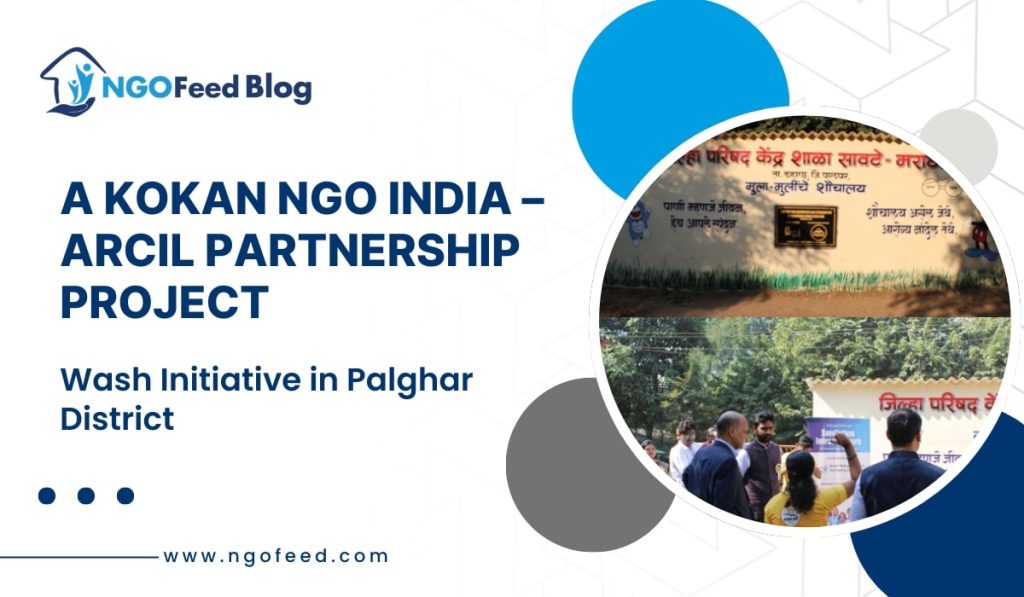
Toilet Construction Project by Kokan NGO India: Access to safe sanitation is a fundamental requirement that directly affects health, dignity and education. Kokan NGO India, recognized as a leading NGO for CSR initiatives in Maharashtra, has been working toward sustainable Water, Sanitation and Hygiene (WaSH) solutions in rural schools and communities. As part of its ongoing WaSH efforts, the organization implemented the Construction and Reconstruction of Toilets Project across seven Zilla Parishad (ZP) schools in the Palghar district, in collaboration with ARCIL.
The project was initiated following a detailed need assessment that revealed inadequate sanitation infrastructure in several rural schools. Many lacked functional toilets, separate facilities for girls, and proper handwashing stations. In some cases, existing toilets were damaged or unsafe for use. These conditions negatively impacted hygiene practices and contributed to student absenteeism, particularly among adolescent girls. Improving sanitation facilities became critical to creating safer, healthier, and more inclusive learning environments.
Table of Contents
Toilet Construction Project by Kokan NGO India: Project Overview
The initiative focuses on constructing new toilet blocks, rehabilitating damaged structures and upgrading sanitation facilities in seven government schools identified as high-need locations. The project benefits students, teachers, school staff, and the surrounding community by ensuring access to clean, safe, and usable sanitation facilities. Key components of the project include:
- Construction of gender-segregated toilets
- Reconstruction of unsafe or non-functional toilet units
- Installation of handwashing stations with a reliable water supply
- Sanitation upgrades designed for long-term durability
- Hygiene and cleanliness awareness sessions for students and staff
Through this intervention, Kokan NGO India and ARCIL aim to enhance dignity, reduce health risks and create safer spaces for children.
Importance of the WaSH Initiative
The WaSH program supports the Sustainable Development Goals, particularly SDG 3 (Good Health and Well-Being) and SDG 6 (Clean Water and Sanitation). In rural areas, inadequate sanitation continues to contribute to water-borne illnesses and poor hygiene practices. This initiative addresses these challenges by enabling students to follow healthy hygiene habits on a daily basis.
Improved sanitation facilities help students, especially girls, feel safer and more comfortable at school. Teachers and staff benefit from cleaner environments while the wider community gains access to improved sanitation during school-related activities. By strengthening hygiene practices, the project also helps reduce absenteeism and promotes a healthier, more supportive learning atmosphere.
CSR Partnership Impact
This project highlights the value of effective CSR partnerships with NGOs to address grassroots-level challenges. The collaboration between ARCIL and Kokan NGO India demonstrates how corporate social responsibility can be translated into visible, measurable and long-lasting impact. As an experienced NGO for CSR implementation, Kokan NGO India ensures need-based planning, transparency and systematic monitoring throughout the project lifecycle.
Regular site visits, technical supervision and quality checks are conducted to maintain construction standards and ensure timely completion. Sanitation-focused initiatives such as this also serve as strong examples for organizations seeking impactful CSR activities and community development programs.
Conclusion
The Construction and Reconstruction of Toilets Project in Palghar district goes beyond infrastructure development, it represents a commitment to dignity, safety and improved health for rural schoolchildren. With ARCIL’s support, Kokan NGO India continues to strengthen school sanitation through its WaSH initiatives, helping students access healthier learning environments and better futures. This project demonstrates how well-planned CSR collaborations can bring meaningful and lasting change to rural communities.
Related NGO's Article Posts