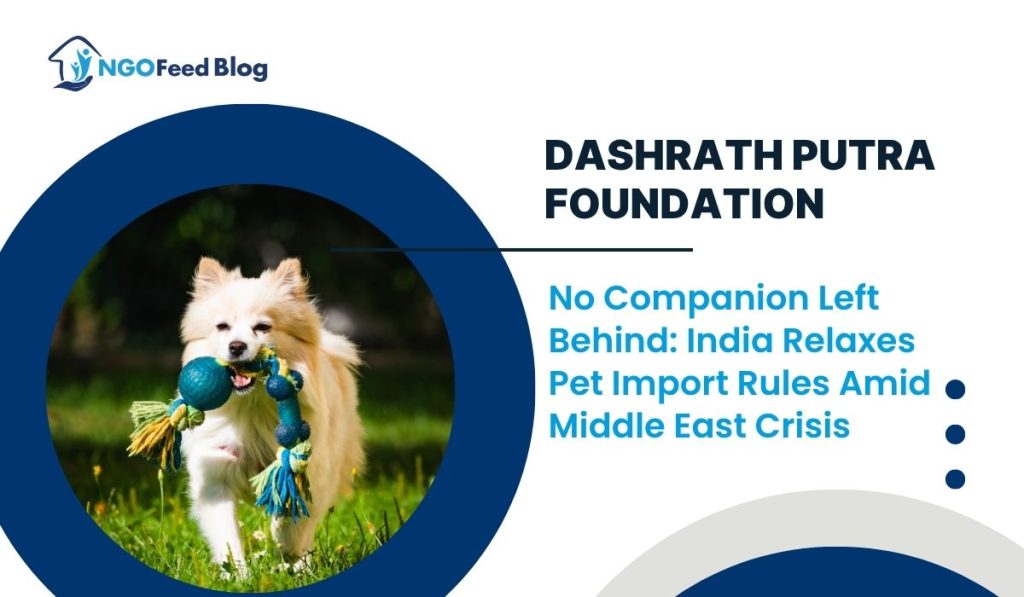
Dashrath Putra Foundation: India Relaxes Pet Import Rules Amid Middle East Crisis: In a significant humanitarian move, the Government of India has announced a one-time relaxation in rules governing the import of pet dogs and cats from conflict-affected regions in the Middle East. The decision, formalised through an Office Memorandum issued by the Department of Animal Husbandry and Dairying (DAHD) on March 12, 2026, aims to support Indian nationals returning from areas impacted by ongoing unrest.
The order addresses what officials describe as “extraordinary and unique situations,” where standard procedures for pet relocation are difficult, if not impossible, to fulfil. The move ensures that individuals evacuating or returning to India are not forced to leave their pets behind due to procedural barriers.
Table of Contents
Background: Challenges Under Existing Law
Under existing provisions of the Live-stock Importation Act, 1898, bringing pets into India typically involves a lengthy and highly regulated process. This includes obtaining No Objection Certificates (NOCs), completing rabies antibody titre tests that require a waiting period of up to 90 days, and securing certified veterinary health documentation from the country of origin.
In conflict zones, however, access to veterinary clinics, laboratories, and government offices is often disrupted. As a result, many pet owners are unable to complete these formalities, creating a risk that animals could be denied boarding or refused entry upon arrival in India.
Key Provisions of the Relaxation
The DAHD’s one-time relaxation introduces several changes to ease the process for affected individuals, covering both pre-import and post-import requirements.
Simplified Proof of Residency:
Pet owners are no longer required to submit long-term residency documentation. A self-declaration stating that the animal has been in the owner’s custody for at least one month will be accepted as sufficient proof.
Grace Period for Vaccination:
Authorities will accept vaccination records even if the latest rabies booster is delayed by up to 15 days. Pet passports and vaccination booklets can be presented as supporting documents.
Consideration for Transit Travel:
For individuals travelling from conflict areas to neighbouring countries before flying to India, the absence of a veterinary check at transit points will not automatically disqualify the animal from entry. However, authorities recommend obtaining a basic health check wherever possible.
On-Arrival Medical Measures:
In cases where pets arrive without valid health certificates or vaccination records, Animal Quarantine and Certification Services (AQCS) will administer rabies vaccination at the port of entry. This replaces earlier provisions that could result in deportation or extended quarantine. The cost of vaccination will be borne by the pet owner.
Implementation and Support Mechanisms
While the relaxation simplifies legal requirements, the process of transporting animals during a crisis remains logistically complex. Civil society organisations, including Dashrath Putra Foundation (DPF), have begun assisting affected individuals in navigating these procedures.
Support efforts include coordination with AQCS offices in major cities such as Delhi, Mumbai, Bengaluru, Chennai, Hyderabad, and Kolkata. Guidance is also being provided on airline-specific regulations, including crate specifications and safety requirements, which remain separate from government import rules. Assistance with compiling available documentation for customs clearance is another area of focus.
A representative associated with such support initiatives noted that the government’s decision has eased a major concern for families, particularly those facing urgent evacuation, and that coordinated assistance can help ensure smoother compliance with procedural requirements.
Guidelines for Incoming Pets
Despite the relaxations, authorities have emphasised that biosafety protocols will continue to be strictly enforced.
All animals entering the country will undergo a clinical examination by AQCS officials upon arrival. Quarantine will be imposed only if the animal shows symptoms of infectious disease. While facilitative measures have been introduced, any associated costs—such as vaccinations administered at entry points or quarantine arrangements, if required—will remain the responsibility of the pet owner.
Advisory for Pet Owners
Officials advise individuals planning to return to India with pets to initiate communication with relevant authorities in advance, rather than waiting until arrival at the airport. Early coordination can help reduce delays and ensure compliance with revised procedures.
The government’s decision reflects a broader effort to respond to humanitarian challenges arising from the crisis, while maintaining necessary safeguards for public and animal health.
Related NGO's News Posts