
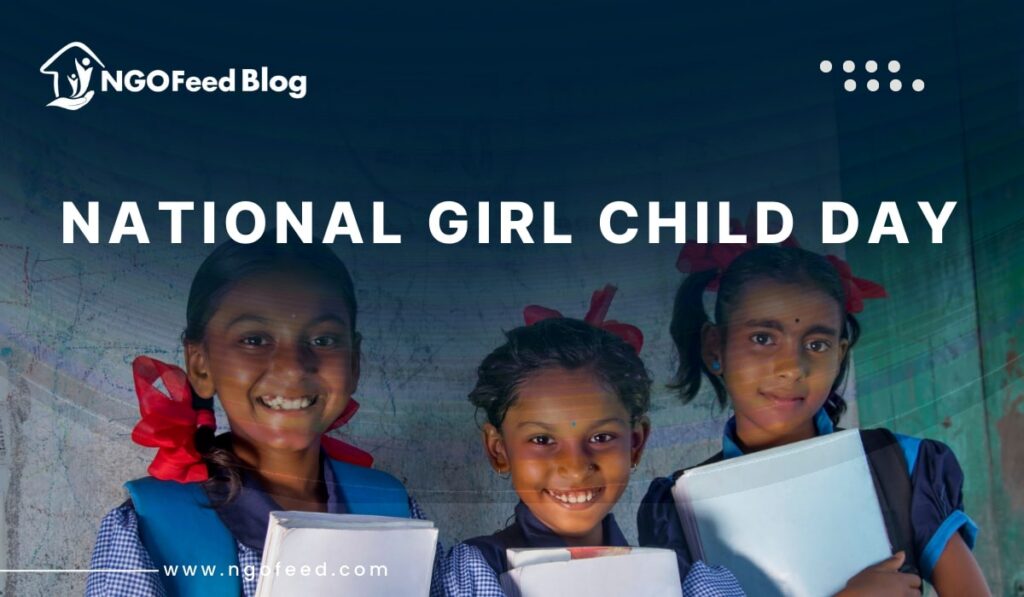
“When you empower a girl, you empower a family, a community and the future of a nation.” Every year on 24 January, India observes National Girl Child Day, a significant occasion dedicated to raising awareness about the rights, wellbeing and opportunities of girls in society. This day is more than a date on the calendar, it’s a collective moment for communities, organizations and policymakers to reflect on progress made and the work still needed to ensure girls grow up with dignity, confidence and equal access to life-changing opportunities.
Table of Contents
National Girl Child Day History
At the World Conference on Women in Beijing in 1995, countries unanimously adopted the Beijing Declaration and Platform for Action for the first time in history. This plan was the most progressive blueprint ever proposed for advancing the rights of not only women but also girls. The Beijing Declaration is the first to address girls’ rights, according to the United Nations.
Countries unanimously adopted the Beijing Declaration and Platform for Action for the first time in 1995 at the World Conference on Women. The National Girl Child Day envisions a progressive blueprint for advancing the rights of not only women but also girls.
Why 24 January?
National Girl Child Day was introduced in 2008 by the Ministry of Women and Child Development, Government of India, to confront deep-rooted gender discrimination and advocate for equal rights for girls.
The choice of 24 January holds symbolic importance, as it is associated with the historic leadership of Indira Gandhi, India’s first woman Prime Minister, who assumed office on this date in 1966, marking a powerful precedent for women’s empowerment. The observance encourages society to challenge harmful stereotypes, celebrate the achievements of girls and promote environments where every girl is valued equally.
Also Read: Role of NGOs in Girl Child Education
National Girl Child Day Objectives
- To increase the people’s consciousness and offer new opportunities to the girl child in society.
- To remove all the inequalities faced by the girl child.
- To ensure that the girl child should get all their human rights, respect, and value in the country.
- To work on gender discrimination, and to educate people.
- To work against diminishing child sex ratio in India and change the mind of the people regarding girls as children.
- To increase awareness about the importance and role of the girl child.
- To provide opportunities to girls and rights for their betterment.
- To educate people about the health and nutrition of a girl.
- To provide equal rights and allow them to move to any part of the country.
National Girl Child Day 2026 Theme
Each year, National Girl Child Day is anchored by a theme that reflects the current challenges and aspirations for girls. The theme for this year, “Empowering Girls for a Bright Future, underscores the importance of ensuring girls have the tools, support and resources needed to fulfil their potential.
This theme highlights that true empowerment goes beyond awareness; it requires access to quality education, healthcare, opportunities for skill development and a society that respects and protects girl’s rights.
Also Read: Role of NGOs in Child Protection
Why This Day Matters?
National Girl Child Day is a reminder of the many challenges girls still face in India, including gender-based discrimination, unequal access to essential services and harmful social norms. It draws attention to barriers such as limited educational opportunities, health and nutrition disparities, and violence or exclusion at home and in the community.
The day also compels policymakers, organizations and individuals to focus on solutions, from improving school enrolment and retention to promoting laws and community practices that safeguard girl’s futures.
Effective Steps Regarding Save Girl Child
Following are the various effective steps to save girl child:
- The position of the girl child in Indian society has been backward for ages because of the extreme desire of parents for the boy-child. It has created gender inequality in society and has been very necessary to remove it by bringing gender equality.
- Extreme poverty in society has created social evil against women as a dowry system which worsens the situation of women. Parents generally think that girls are only to spend money that’s why they kill girl children before or after birth in many ways (female infanticide, dowry deaths, etc). Such issues need to be removed urgently to save girl children.
- Illiteracy is another issue which can be removed through a proper education system for both genders.
- Empowering women is the most effective tool to save girl children.
- People should be aware through some effective campaigns regarding saving the girl child.
- A girl child is unsafe inside as well as outside the mother’s womb. She has fear in many ways all through her life with the men whom she gives birth to. She is ruled by the men whom she gives birth to and it is a matter of laughter and shame for us. Education is the best tool to bring a revolution of saving and respecting a girl child.
- A girl child should be given equal access and opportunities in every field.
- There should be safety and security arrangements for girls in all public places.
- Family members of a girl child can be a better target to make the save the Girl Child campaign successful.
Also Read: Role of NGOs in Child Welfare
How is National Girl Child Day observed?
Across the country, National Girl Child Day is marked by a wide range of activities that bring communities together and inspire change:
- Educational Programs: Schools and colleges host discussions, debates and seminars that emphasize girl’s rights and gender equality.
- Workshops and Awareness Campaigns: NGOs, civil societies, and local authorities organize awareness drives on education, health and legal rights of girls.
- Cultural and Creative Initiatives: Competitions in art, storytelling and performance allow girls to express their aspirations and share their perspectives.
- Public Rallies and Dialogues: Community events bring voices together to advocate for policy change and inclusive practices.
These observances not only educate the public but also celebrate the spirit and potential of girls, reinforcing that empowerment is a community responsibility.
The Broader Impact
National Girl Child Day aligns with wider national initiatives such as Beti Bachao Beti Padhao (Save the Daughter, Educate the Daughter), which tackles issues like declining child sex ratios and gender-biased practices.
By championing access to quality education, the day reinforces the belief that schooling is foundational not just for academic success but also for confidence, leadership and social mobility. It brings focus to health and nutrition initiatives that ensure girls grow up strong and healthy and it underscores the urgency of creating safe environments, free from violence and discrimination in schools, homes and public spaces.
Role of NGOs and Civil Society
Non-governmental organizations play a vital role in amplifying the impact of National Girl Child Day. They work at the grassroots level to:
- Support education and mentoring programs that help girls stay in school and pursue careers.
- Deliver health and wellness services tailored to girl’s needs.
- Advocate for policy reforms that protect girl’s rights and access to opportunities.
- Create safe spaces where young girls can learn, lead and grow without fear.
By partnering with governments, communities and international bodies, NGOs help turn awareness into measurable change.
A Future of Equality and Opportunity
As society evolves, the message of National Girl Child Day remains clear, equal opportunity for girls is not optional, it is essential for a just, prosperous and inclusive future. Investing in girl’s means investing in the strength of families, communities and nations. When girls are empowered to learn, lead and innovate, everyone benefits.
National Girl Child Day reinforces the collective belief that every girl deserves a world where dreams have no gender and possibilities are limitless.
Conclusion
Empowering girls leads to significant benefits not only for them but also for their families and communities. Educated girls are more likely to contribute positively to society, break the cycle of poverty, and advocate for their rights. However, despite these advantages, girls continue to face numerous obstacles such as gender discrimination, poverty, and violence. Addressing these issues is essential for creating a more equitable world.
As we reflect on the importance of these observances, it becomes clear that collective action is necessary. Governments, organizations, and individuals must work together to promote policies that support girls education, health, and safety.
In conclusion, let us commit to fostering an environment where every girl can realize her potential. By celebrating their achievements and amplifying their voices, we can ensure that the aspirations of girls are not just dreams but achievable realities. Together, we can build a world where every girl is empowered to shape her destiny and contribute meaningfully to society.
FAQs
1. Why is National Girl Child Day celebrated on 24 January?
It commemorates the importance of girls and aligns with significant historical leadership by women in India, while promoting gender equality and opportunity.
2. When was National Girl Child Day first introduced?
The day was launched in 2008 by the Ministry of Women and Child Development to raise awareness about girl’s rights and welfare.
3. What is the theme for this year’s observance?
The theme is “Empowering Girls for a Bright Future”, focused on providing girls with the tools and opportunities to thrive.
4. How is National Girl Child Day observed?
It is celebrated through educational events, awareness campaigns, cultural programs and community dialogues that advocate for girls’ welfare and equality.
5. How can individuals participate?
People can join awareness events, support NGOs working for girl’s empowerment, organize local activities and promote positive messages about gender equality and rights.
Top NGOs State Wise List
Related Important Days Posts




Jay bharat