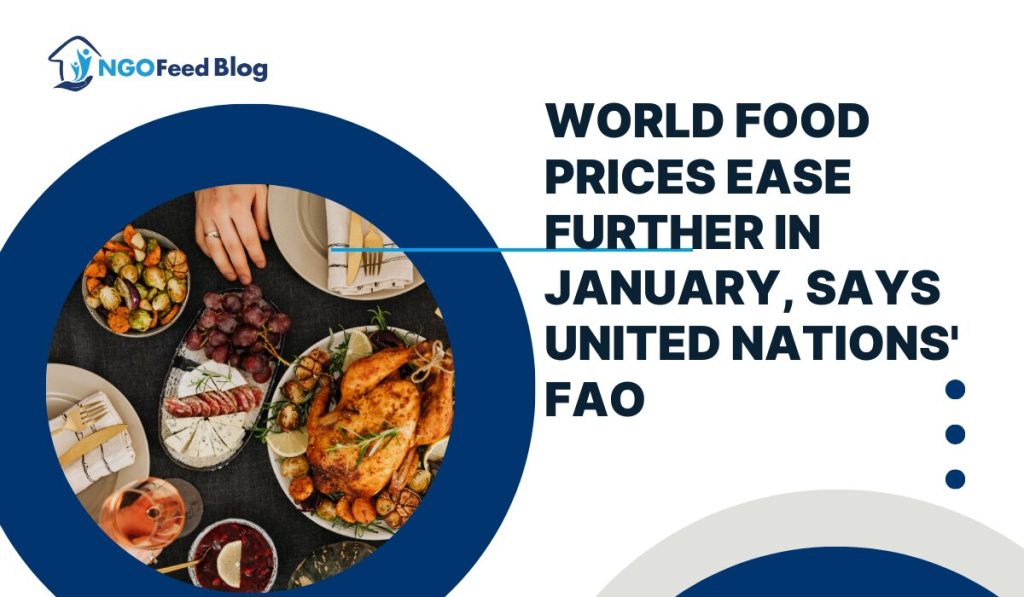
FAO Index Update: According to the Food and Agriculture Organization (FAO) of the United Nations, global food prices fell for the fifth month in a row in January, therefore lightening for the fifth month running. Lower quotes for dairy, meat, and sugar propelled the moderation in prices, somewhat relieving international food markets.
Compared to December, the FAO Food Price Index, which monitors monthly variations in the prices of a basket of regularly traded food products, dropped slightly. Though the general trend was downward, price changes among commodity groups stayed inconsistent.
Supported by stronger rice prices, fueled by firmer worldwide demand, the cereal price index registered a small rise of 0.2 percent to compensate for somewhat weaker prices for wheat, maize, and other main cereals. Rice prices increased with steady Asian demand, although other grains were under weight from large supplies.
Meanwhile, driven by lots of export availability and low purchasing interest, dairy prices had the most significant drop. Reflecting lower pig meat prices, meat prices also decreased somewhat; sugar costs fell in anticipation of better production prospects in important producing nations.
Conversely, the vegetable oil price index rose helped by increasing palm, soy, and sunflower oil prices in view of tightening world supply and constant demand.
According to FAO, worldwide cereal output is predicted to be strong; increasing stock levels would help stabilise markets in the next months. Although food costs are still well below their 2022 highs, the agency warned that weather risks, geopolitical conflicts, and logistical bottlenecks could yet impact price movements.
Related NGO's News Posts