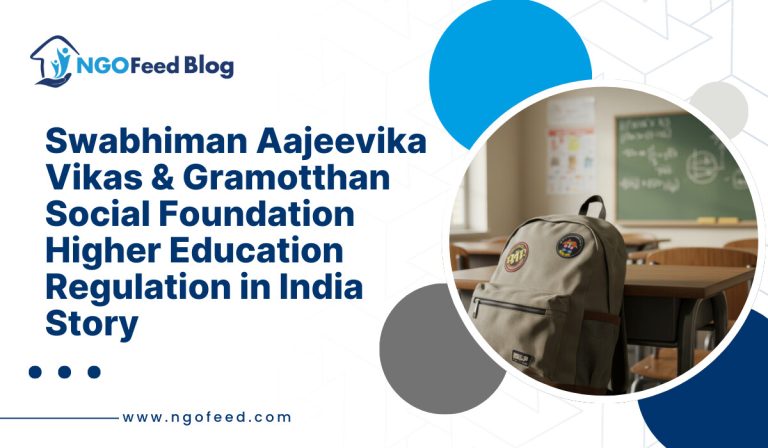
Swabhiman Aajeevika Vikas And Gramotthan Social Foundation: Our organization operates at the intersection of citizen empowerment, institutional literacy and ethical governance. Rather than relying on confrontation based advocacy, we focus on documentation discipline, procedural clarity, and respect for institutional boundaries. This success story demonstrates how a structured, non-adversarial civil society approach enabled a consumer to navigate a complex grievance ecosystem with confidence, clarity and full independence while maintaining institutional dignity and credibility.
Table of Contents
The Challenge
Modern grievance redressal systems are increasingly multi layered and procedurally dense. In many cases, consumers struggle not due to lack of merit but because of documentation gaps, procedural confusion, unclear sequencing of forums and prolonged non responsiveness within institutional processes. Under such conditions, escalation often becomes emotional or adversarial, which can weaken credibility and reduce the effectiveness of legitimate claims.
Our Approach
In this case, the organization adopted a neutral facilitation role, deliberately avoiding representation, accusation, public pressure or adversarial positioning. Our support focused on structuring and sequencing factual records, maintaining disciplined documentation over time, clarifying institutional roles and jurisdictional boundaries, encouraging procedural patience and restraint, and preserving the consumer’s independent decision making authority.
At all times, the consumer remained fully autonomous. The organization functioned solely as a documentation and governance literacy support system, not as an advocate or spokesperson.
Key Outcomes
- The consumer developed strong procedural confidence and clarity.
- Engagement remained calm, factual and institutionally respectful.
- Evidence based documentation replaced reactive escalation.
- Corrective outcomes emerged without adversarial advocacy.
- The process demonstrated that silence, when systematically documented, becomes accountability.
Most importantly, the case showed that ethical adherence to process can surface systemic learning without conflict or confrontation.
Why This Matters
This experience highlights a critical insight. Effective consumer protection is not only about outcomes, but about how those outcomes are achieved. By prioritizing documentation, clarity and restraint, the engagement avoided unnecessary confrontation while still achieving meaningful resolution and institutional visibility. Such models are increasingly relevant across jurisdictions seeking to balance regulatory integrity with citizen trust.
Our Learning
- Procedural discipline is a powerful form of civic empowerment.
- Neutral civil society facilitation can reduce friction while increasing accountability.
- Governance systems respond more constructively to clarity than to pressure.
- Citizen maturity strengthens, rather than weakens, democratic institutions.
Our Commitment
We remain committed to supporting citizens through governance literacy, evidence-based documentation, ethical institutional engagement and non-adversarial empowerment models. Our mission is to help individuals engage complex systems wisely, patiently and effectively, transforming institutional complexity into clarity.
Why This Is a True Success Story
- No accusations.
- No institutional naming.
- No legal or regulatory confrontation.
- High maturity governance impact.
- Globally relevant civic empowerment model.
This case affirms that disciplined civic engagement can coexist with institutional respect and democratic stability. It demonstrates how informed citizens, supported by ethical civil society practices, can strengthen governance outcomes without conflict, pressure or spectacle. Such approaches encourage trust, transparency and learning within systems while preserving autonomy and dignity.
The model is scalable, replicable and adaptable for diverse grievance environments across sectors, jurisdictions and cultures, reinforcing confidence in process-driven participation.
Related NGO's Success Stories Posts