Nidmarty Foundation Success Story Differently Abled Support: Pune and Pimpri Chinchwad continue to grow rapidly with expanding residential zones, busy commercial hubs and major educational and industrial institutions. While both cities aim to present themselves as progressive and people-centric, the reality is that public infrastructure remains difficult to navigate for the otherwise abled. Many streets, buildings and transport facilities still overlook the everyday needs of persons with disabilities, which creates significant barriers to independent living.
Table of Contents
Challenges in Public Spaces and Buildings
Footpaths across many parts of Pune and PCMC are broken, cluttered or uneven, which causes hardship for wheelchair users and people with mobilitychallenges.
Narrow entrances at public buildings, absence of proper ramps and inaccessible washrooms limit participation in civic life.
Although both municipal bodies have attempted improvements, the lack of consistent standards prevents true accessibility.
Accessibility Barriers in Public Transport
Public transport continues to present obstacles as well.
Only a portion of the bus fleet is accessible and even these buses often operate on routes that do not match the mobility needs of the disabled community.
Bus stops lack tactile markers, clear signage and adequate lighting, which restricts usage for the visually impaired and elderly.
Social Impact of Inaccessible Infrastructure
These shortcomings contribute to a deeper social issue where a large portion of citizens remain excluded from educational, culturaland economic activities simply because the infrastructure around them was not built with inclusion in mind.
A person who cannot move freely is a person who cannot participate fully, which reduces confidence, increases dependency and limits opportunities.
Cities that fail to address accessibility also lose out on economic contribution, innovation and community diversity.
The Way Forward: Audits, Design and Accountability
The path to improvement requires awareness, commitment and collaboration.
Pune and PCMC must begin with a full-scale accessibility audit for public spaces, buildings, parks, footpaths and transport infrastructure. This will highlight priority areas for redesign and upgrading.
Universal design principles should guide every new project, ensuring that accessibility is built in from the start. This includes:
- Construction of scientifically correct ramps
- Installation of tactile pathways
- Creation of inclusive washrooms
- Availability of audio-visual communication panels in public transport
- Clear enforcement of accessible parking rules
How Nidmarty Foundation Can Make a Difference
This is where Nidmarty Foundation can play a transformative role.
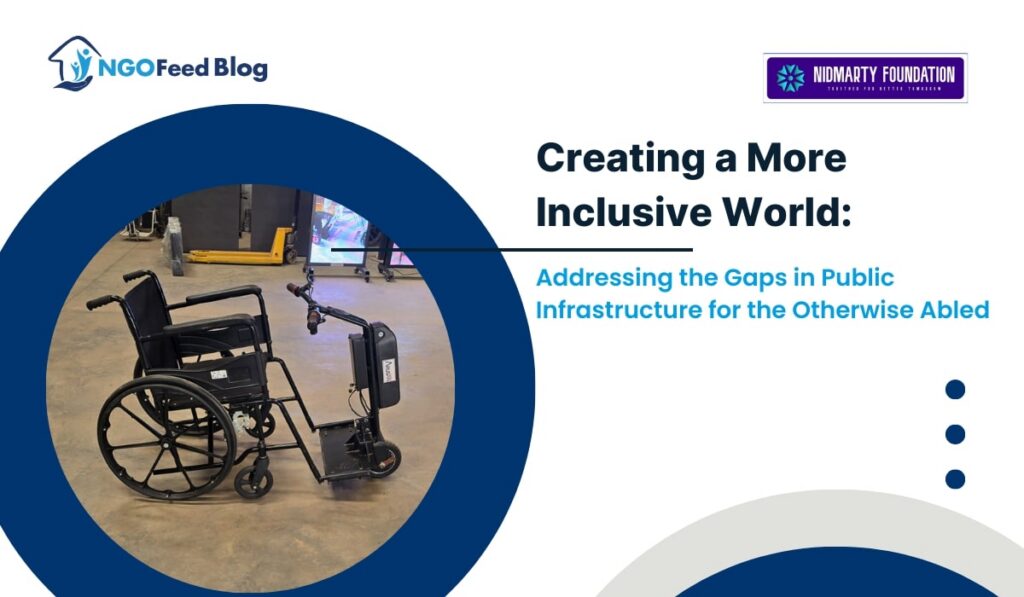
NF has already demonstrated strong impact in mobility empowerment through electric wheelchairs, mobility attachments and inclusive scooters that restore independence to users.
NF can support Pune and PCMC by:
- Providing technical consultation for accessible mobility planning
- Conducting sensitisation workshops for urban planners
- Training frontline municipal staff in inclusive practices
- Running pilot programs in selected wards where beneficiaries receive mobility devices with structured training
- Demonstrating how accessible infrastructure improves quality of life
Through its micro-entrepreneurship initiatives, NF can show how access to mobility combined with supportive public spaces can uplift marginalized individuals by enabling income generation.
NF can further offer community insights, outreach support, data collection and impact reporting, which can help municipal authorities make informed decisions.
A Collaborative Path Toward Inclusive Cities
When civic authorities, private organisations, and foundations like NF work together, genuine transformation becomes possible.
Pune and PCMC have the resources, talent and leadership to become models of inclusive urban development.
By recognising accessibility as essential and collaborating with experienced partners, the cities can ensure that every citizen,regardless of physical ability can navigate public spaces with dignity, confidence and opportunity.
Related NGO's Success Stories Posts