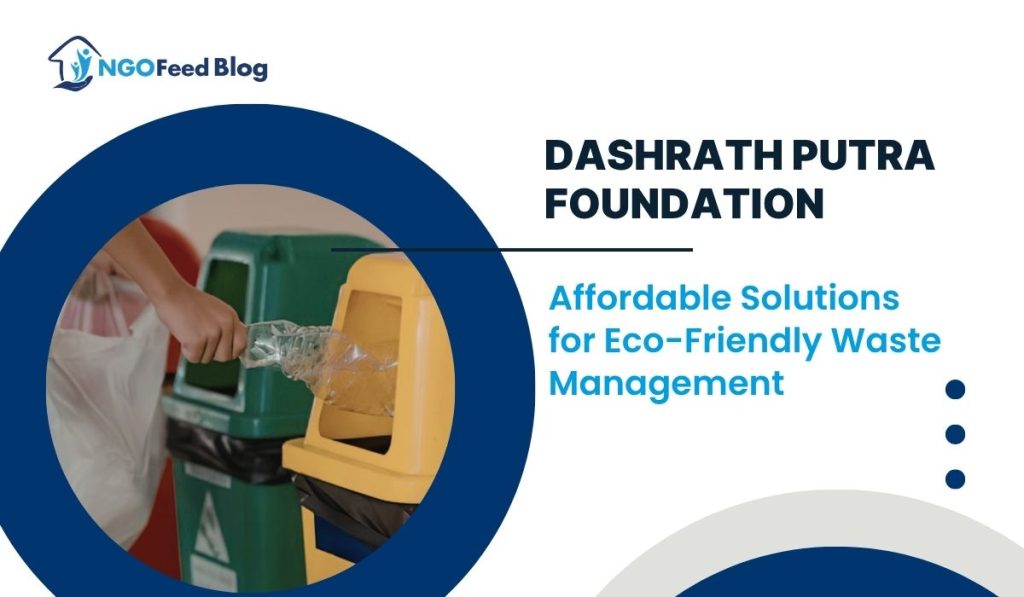
Dashrath Putra Foundation Affordable Solutions for Eco-Friendly Waste Management: The steady rise in global population and consumption has led to a sharp increase in waste generation, placing growing pressure on landfills and natural ecosystems. Conventional disposal methods such as landfilling and incineration are increasingly being questioned due to their long-term environmental impact. In this context, eco-friendly waste management has emerged as a practical approach that focuses on reducing waste, encouraging reuse, promoting recycling, and supporting composting practices.
Table of Contents
The Need for Sustainable Waste Management
Eco-friendly waste management offers both environmental and economic advantages. Reducing the volume of waste sent to landfills helps conserve land and limits the contamination of soil, air, and water. It also plays an important role in addressing climate change. Landfills are a major source of methane emissions, a greenhouse gas that contributes significantly to global warming.
From an economic standpoint, better waste management practices can help reduce costs over time. Households and businesses that generate less waste often spend less on disposal. In addition, recycling and composting can create useful outputs such as raw materials and organic fertilizers, reducing dependence on new resources and chemical inputs.
Practical and Affordable Solutions
While some advanced waste management systems require significant investment, several cost-effective measures can be adopted by both individuals and organisations.
Reduce and Reuse:
Minimising waste at the source is one of the most effective strategies. This includes making mindful purchasing decisions, selecting products with minimal packaging, and reusing materials wherever possible. For businesses, steps such as adopting green procurement policies, using reusable containers, and repurposing materials can contribute to waste reduction.
Recycling:
Recycling remains a central component of sustainable waste management. Many areas offer structured systems for collecting materials such as paper, plastic, glass, and metal. Proper segregation of waste at the source ensures that recyclable materials are diverted away from landfills. Organisations can support this by setting up designated recycling points and spreading awareness about correct disposal practices.
Composting:
Organic waste, including food scraps and garden waste, can be effectively managed through composting. This process converts biodegradable waste into nutrient-rich compost, which can be used in agriculture and gardening. Composting can be carried out at the household level using simple bins or through participation in community-based initiatives.
Community-Based Initiatives:
Local communities often play a significant role in promoting sustainable practices. Educational programmes, composting workshops, and designated collection centres for electronic and hazardous waste help individuals adopt responsible waste management habits. Participation in such initiatives can significantly reduce environmental impact.
Smart Waste Management Technologies:
Technological advancements are also contributing to improved waste management. While some solutions are expensive, others are becoming increasingly accessible. For example, sensor-based bins can help optimise waste collection routes, thereby reducing fuel use and emissions. Digital tools and platforms can also assist users in monitoring waste generation and identifying areas for improvement.
Role of Policy and Innovation
Government policies are central to the adoption of sustainable waste management practices. Measures such as setting waste reduction targets, enforcing recycling regulations, and offering incentives for eco-friendly initiatives encourage wider participation. At the same time, ongoing research and innovation are opening new possibilities, including improved recycling techniques and methods for converting waste into energy and other usable resources.
Conclusion
Eco-friendly waste management is increasingly being recognised as both an environmental necessity and an economic opportunity. Although certain systems may involve initial costs, the long-term benefits include reduced expenditure, conservation of natural resources, and improved environmental health. Adopting simple practices such as reducing waste, reusing materials, recycling, and composting can make a measurable difference. With continued support from policy frameworks and technological innovation, sustainable waste management can be effectively implemented at both individual and institutional levels.
Related NGO's Success Stories Posts