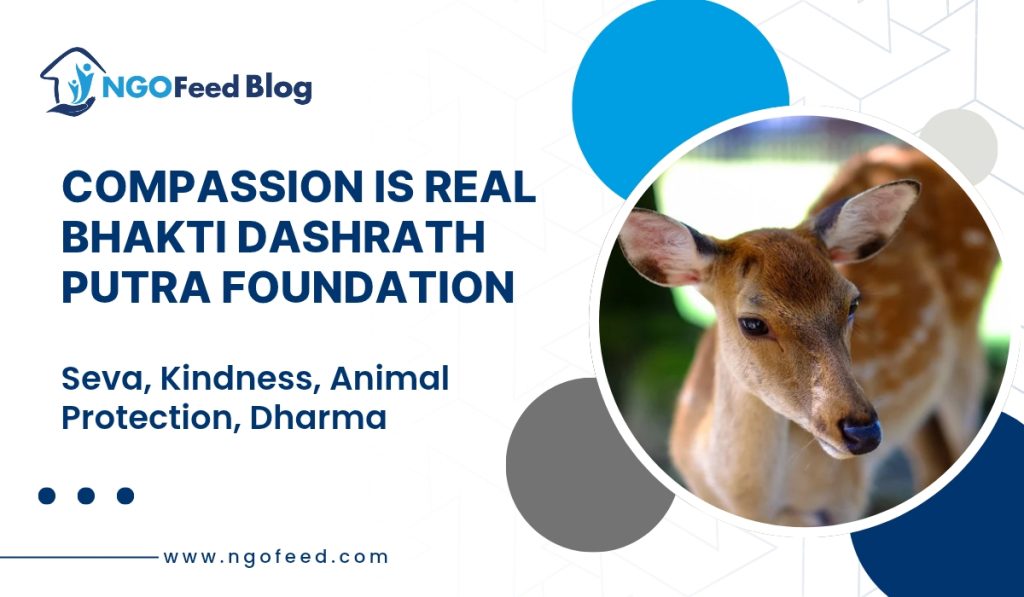
Compassion Is Real Bhakti Dashrath Putra Foundation: We visit temples with devotion. We stand in long queues for darshan. We buy special laddoos and sacred offerings. We fold our hands and say with faith, “God sees everything.”
But pause for a moment. If everything is truly seen, do we remember everything connected to the values we claim to follow?
Across Indian cultural traditions, life has never been divided into “important” and “unimportant.” Every living being has meaning. Every creature holds a place in shared heritage and collective consciousness. Animals are not separate from human life; they are deeply woven into cultural, ethical and historical narratives that teach responsibility, balance, and coexistence.
This reflection is not about religion alone. It is about compassion, awareness and humane responsibility in everyday life.
Table of Contents
Cultural Symbols and the Message They Carry
In traditional storytelling and symbolism, animals have long represented virtues and moral teachings.
Nandi, associated with Lord Shiva, symbolizes strength, loyalty and steadfastness.
Garuda, connected with Lord Vishnu, represents protection and courage.
The mouse linked with Lord Ganesha reminds us that even the smallest being carries purpose.
The dog associated with Kaal Bhairav reflects loyalty and guardianship.
These figures are not merely decorative or symbolic references. They reflect a deeper idea, that humans and animals share a moral relationship built on respect and care.
When cultural symbols teach reverence for life, they also imply responsibility toward living beings in the real world.
A Difficult Contrast in Everyday Reality
Yet today, the treatment of animals often tells a different story.
- Leftovers are thrown carelessly on roads instead of mindful feeding.
- Animals approaching humans are often chased away.
- Injured animals remain untreated.
- Neglect and cruelty are normalized in public spaces.
We may offer sweets and flowers inside places of worship, yet ignore the hungry cow standing outside. We decorate altars but overlook the wounded dog near our homes. We speak of prosperity and blessings, yet deny water to a thirsty animal during extreme heat.
This contrast raises an important question, is compassion being practiced beyond ritual spaces?
Compassion Beyond Places of Worship
Values such as empathy, kindness and service are not limited to rituals or buildings. They are reflected in daily actions.
Care is shown in how we respond when no one is watching.
Responsibility is reflected in how we treat vulnerable lives.
Compassion becomes meaningful only when translated into action.
Helping an injured bird, offering water to an animal or ensuring safety for a helpless being are not religious acts alone, they are humane actions rooted in ethical responsibility.
Service as a Social Responsibility
In many Indian philosophies, seva, selfless service, is considered foundational to a balanced society. Today, this idea extends naturally into animal welfare, environmental awareness and community care.
Compassion is not weakness; it is social strength.
Protecting life is not charity; it is responsibility.
When communities protect animals, they also promote public safety, ecological balance and humane coexistence.
Completing the Meaning of Devotion Through Action
True devotion does not end with folded hands. It begins with open hands.
It begins when we:
Feed the hungry
Treat the injured
Rescue the abused
Stand against cruelty
Speak when others remain silent
Compassion is not a symbolic act. It is a conscious choice repeated daily.
Why Awareness and Action Matter
Neglect and cruelty often continue because people believe someone else will act. Silence allows suffering to remain invisible, while awareness creates protection.
If you see neglect, abuse, injury or distress, whether affecting animals, birds or even fellow humans, do not ignore it.
One message. One call. One step can save a life.
Because service is not charity. Service is duty.
A Humanitarian Perspective on Compassion
The message is simple: kindness strengthens communities. Humane action builds trust between people and the environment around them.
The day we begin to recognize value in every living being, compassion moves from philosophy into practice. Respect for life, regardless of species, creates a more ethical and balanced society.
Places of worship gain deeper meaning when values practiced inside them are reflected outside as well.
A Call for Collective Compassion
Let us not limit values to rituals or symbols. Let us recognize dignity in every life that breathes.
The purest offering is kindness.
The strongest prayer is empathy.
The highest form of devotion is protection of life.
Compassion is the highest prayer.
Service is real commitment.
Related NGO's Success Stories Posts